Patient / Provided Matching Platform
Connecting people struggling with anxiety and depression to the right care
Client
GuideWell
Role
Service Design Lead
Industry
Healthcare
Focus
Venture Design
The Challenge
GuideWell is a not-for-profit company focused on helping communities achieve better health. Their innovation team wanted to accelerate change for better outcomes, transforming the delivery of healthcare through new ways to access and experience care, and empower people to take charge of their health. With anxiety and depression on the rise, behavioral health was selected as the focus area for its first venture design initiative.
Research
I conducted interviews with 15 participants across diverse demographics, ages, and levels of distress. Key insights revealed barriers to recognizing symptoms, difficulty navigating care options, and cultural stigma around mental health. Participants also showed a strong preference for anonymous digital tools. These findings informed four archetypes based on self-reliance and level of proactivity in seeking care.
Insight #1
This seems normal and I think it can wait.
Insight #2
My body is an alert system, but not a GPS.
Insight #3
I’m not sure who I’m supposed to talk to.
Insight #4
What others think about me matters.
Insight #5
My culture doesn’t embrace mental health.
Insight #6
Digital apps give me anonymity and knowledge.
The Hacker
Reliance on Self
Active in Finding Solutions
Hackers believe they are adequately treating their mental health with lifestyle solutions like exercise, journaling, or practicing their faith. They are self-starters who take pride in identifying their own coping mechanisms and as a result may not get the full benefit of clinically proven treatment options. Though they primarily rely on themselves, hackers may use a small support system to validate what they’re experiencing.

The Seeker
Reliance on Others
Active in Finding Solutions
Seekers proactively research solutions they haven’t tried in order to reduce their distress. They view their professional care plan as an entry point to better understanding themselves and what can make them better. They combine clinically proven treatment solutions with lifestyle hacks to manage their mental health long term. They are willing to share their struggles with their network and value inputs from those who are going through similar experiences.

The Avoider
Reliance on Self
Passive in Finding Solutions
Avoiders are individuals who struggle prioritizing their mental health over other activities that compete for their time and effort. They tend to believe that they are “mentally strong” and do not want to be labeled as weak. Often, they worry that disclosing their emotional issues may negatively impact their relationships with others. They seek temporary relief from their distress by stress eating, sleeping, and entertainment.

The Delegator
Reliance on Others
Active in Finding Solutions
Delegators are accustomed to their routines and as a result prolong addressing underlying causes of their distress. They take action only when symptoms get in the way of their daily lives. They will follow the path of least resistance to improve their distress — without over-analyzing the cause or even the potential solutions. They like to visualize their care plans and react positively to milestones and rewards.

Co-Design Workshops
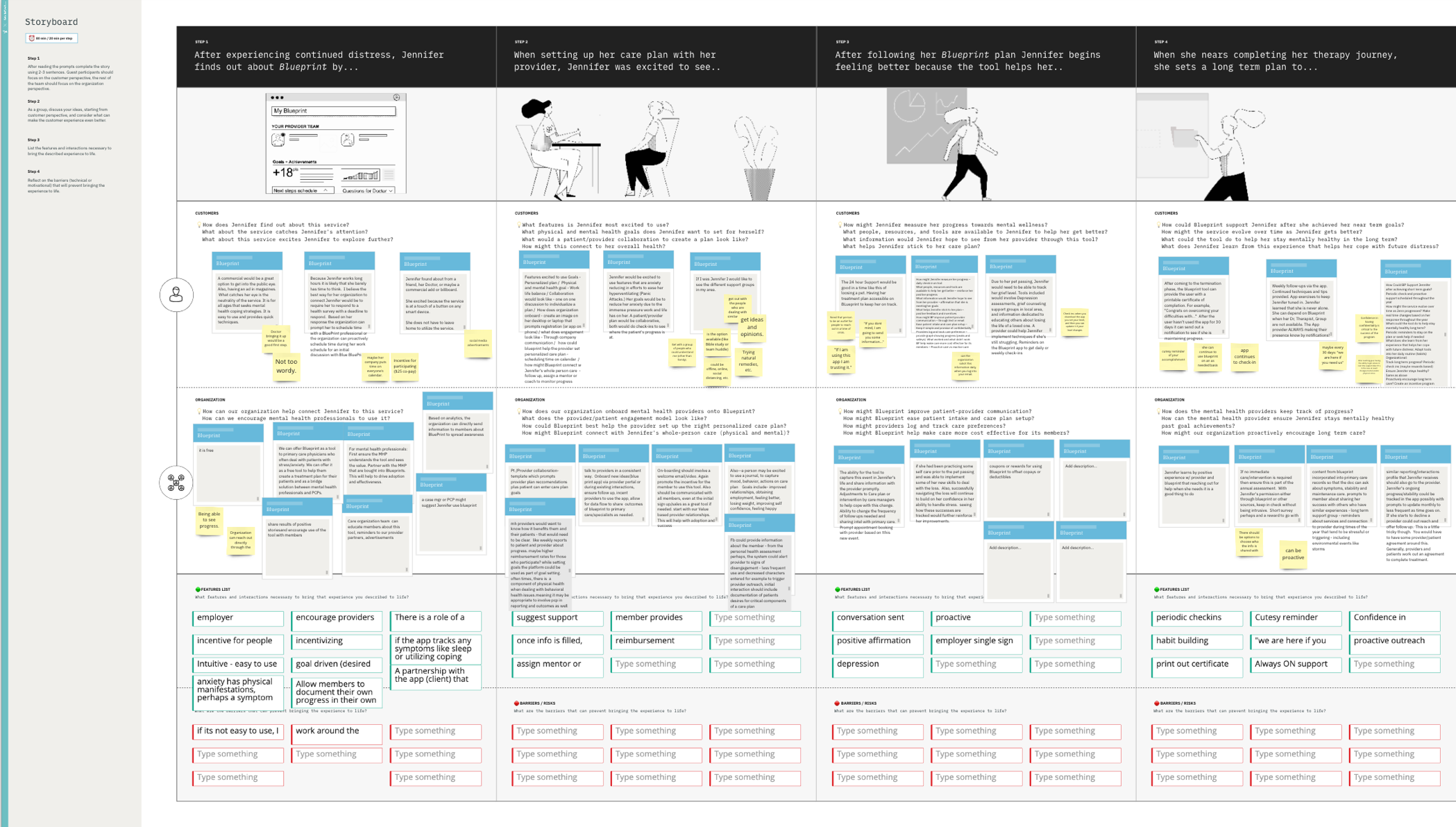
Using the four archetypes, I facilitated a co-design workshop with the client to explore solutions that could accelerate care activation. This led to three initial concepts, later refined in a second workshop with research participants. While users shaped the front-stage experience, the client focused on defining back-stage processes to ensure feasibility and alignment with operational needs.
Product Vision
The selected concept, Trivvi, is a patient-provider matching platform designed to improve adherence and increase network utilization. It addressed key needs across all archetypes while also supporting provider retention. A follow-up research phase expanded the vision, introducing tools to help providers streamline administrative tasks and improve efficiency within their workflows.
Members…
Can get a recommended behavioral health provider who is the right fit for your situation, symptoms, preferences and budget.
Behavioral Health Providers…
Can build a more sustainable business by streamlining the un-billable administrative tasks required to screen and treat insured patients
Experience
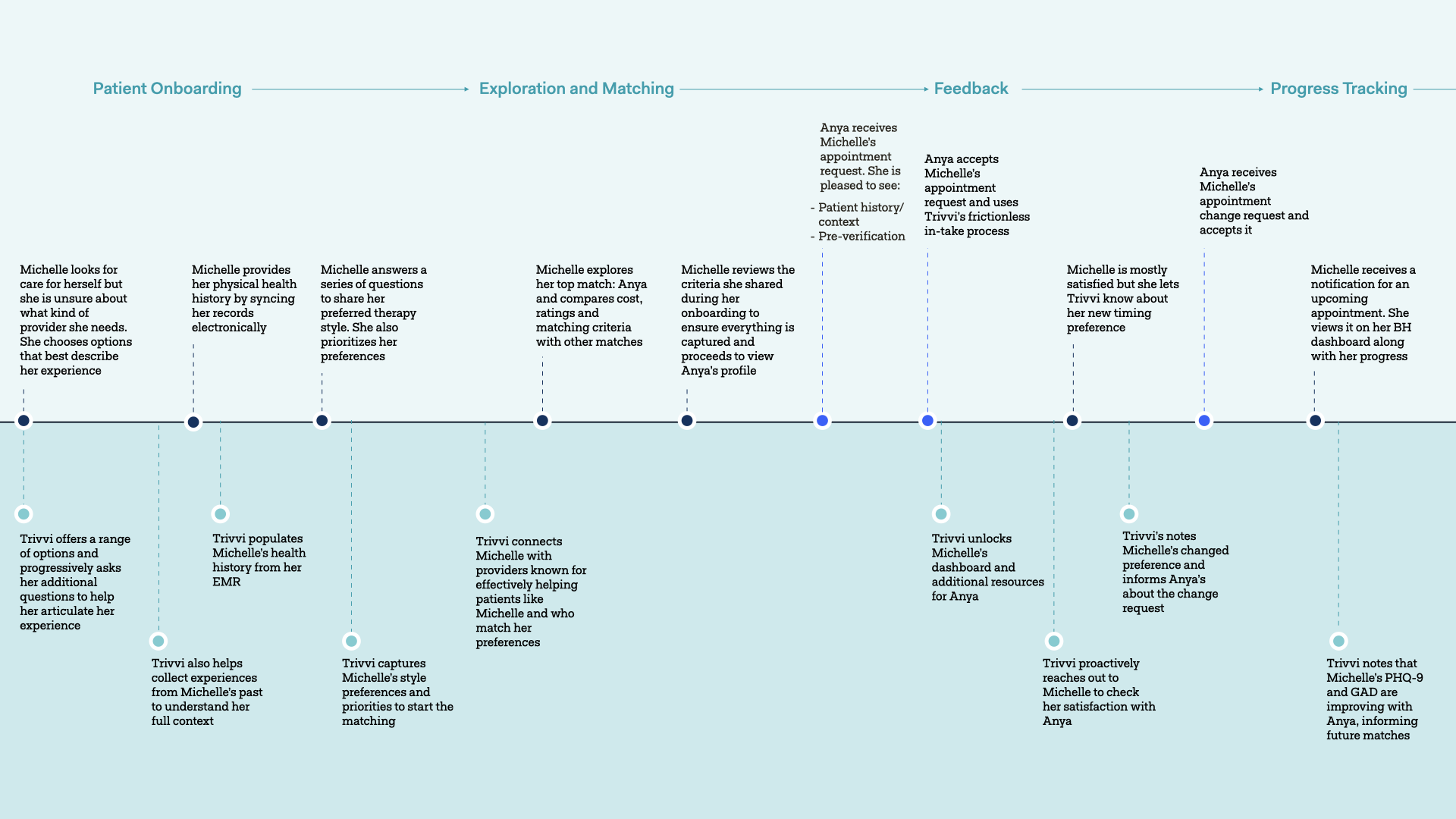
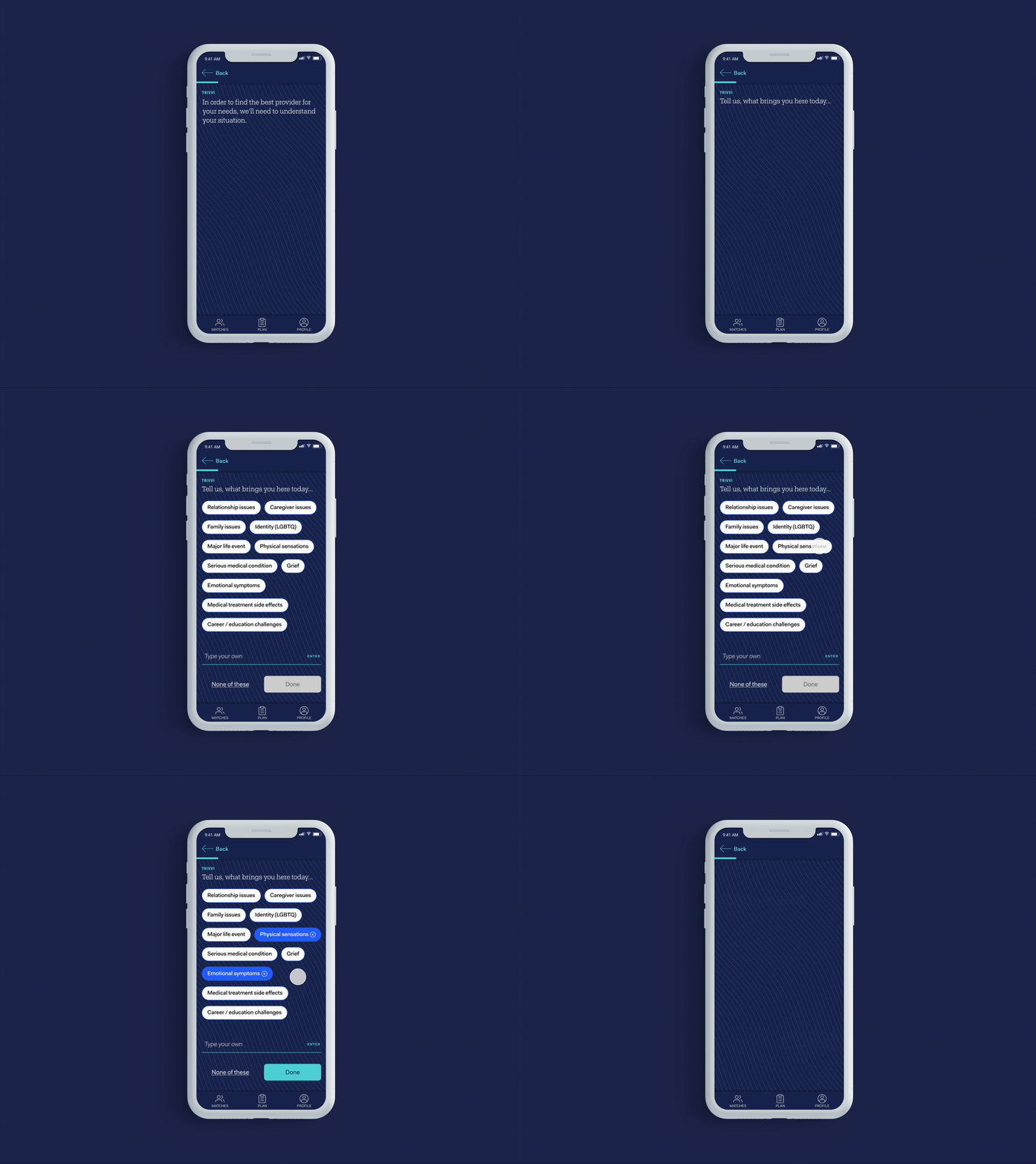
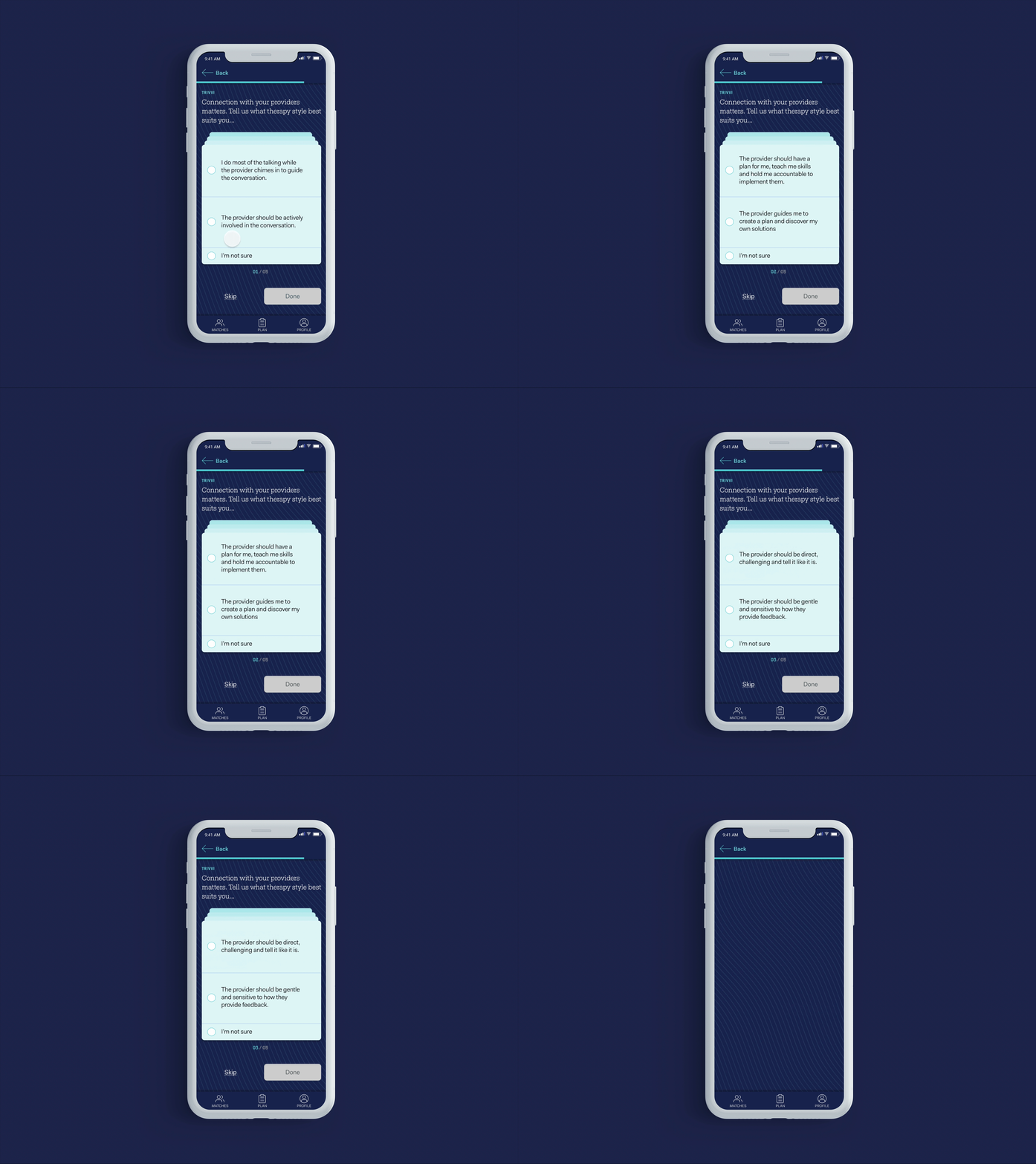
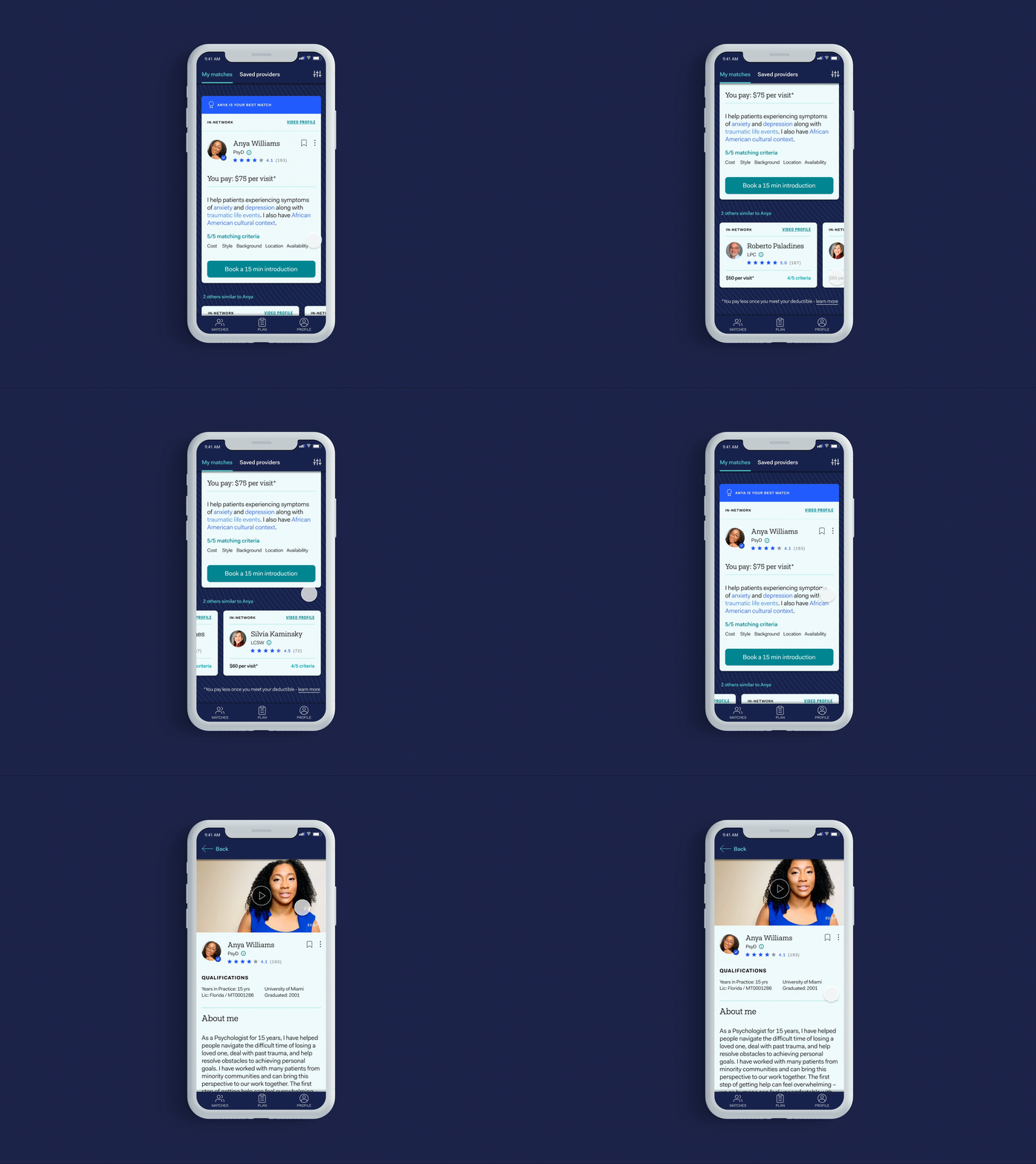
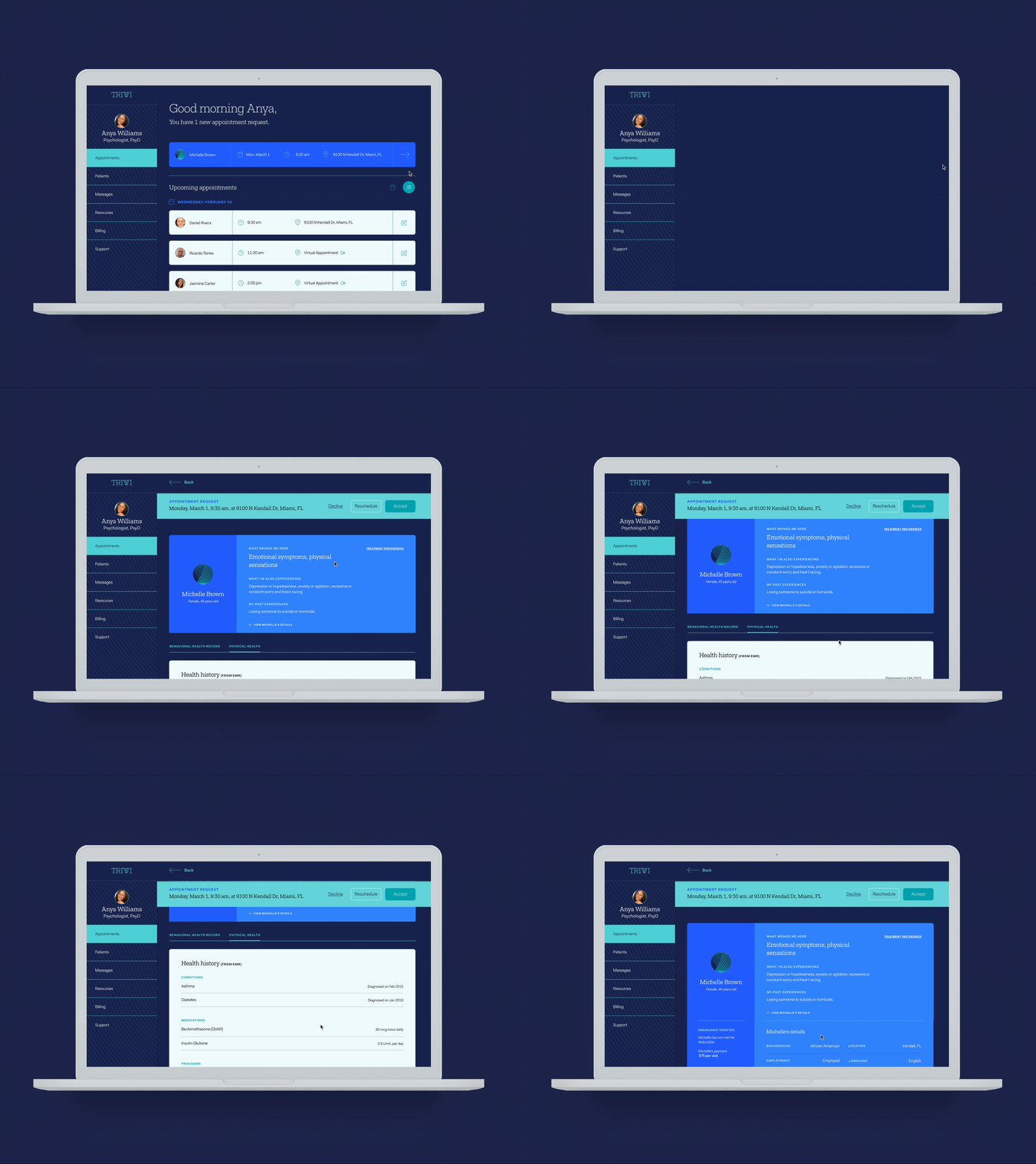
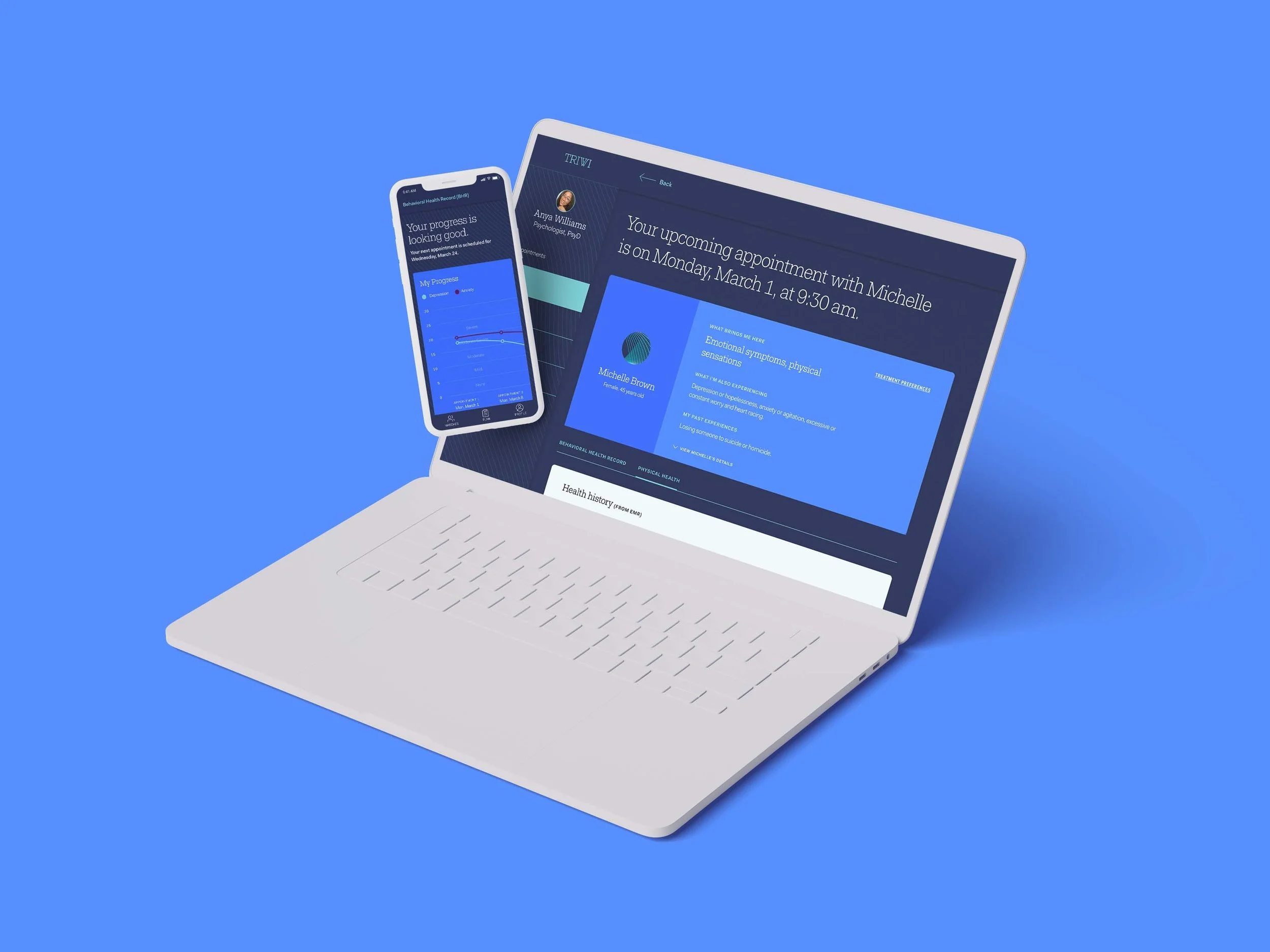
An interactive prototype illustrated journeys for both patients and providers. Patient onboarding includes symptom selection, provider style cards, and personalized matches based on preferences like proximity, cost, race, and gender. On the provider side, the experience features simplified intake, assessment libraries, scheduling tools, and a unified progress view across mental and physical health.