Small Business Banking Platform
A scalable business banking platform that speaks to the user
Role
Interaction Design Lead
Focus
Product Design
Industry
Financial Services
Client
Fidelity Information Services
The Challenge
FIS is the world’s largest provider of financial technology solutions. Their banking products are used in 130 countries and serve most of the US medium to small banks. The challenge was to redesign their business banking platform targeting small businesses through scalable functionalities and new commercial capabilities, including approval limits, user entitlements and more sophisticated transfer capabilities.
Research
I conducted interviews with five finance professionals from small and mid-sized companies to understand how they manage financial operations across fragmented tools and systems. The research revealed that less experienced users often rely on guidance to make informed decisions, while more advanced users value efficiency and control. Across both groups, there was a clear preference for solutions that simplify workflows, improve data continuity, and use conversational interfaces to make complex financial tasks more accessible and intuitive.
Insight #1
Relationship is still #1
Each of our participants valued the relationship with their banker. For some it was the most important factor, for some it was a decision that they inherited, but all of them valued the personalized attention they receive.
How do we create a best in class UX that strengthens and enables the relationship between banker and customer?
Insight #2
Scaling Experiences
As businesses grow, people’s financial needs may not change, but the volume of transactions and the sophistication with which they approach their needs grows.
Can we create a singular platform that meets the needs of users who are just figuring out how to run their business and those that are finance professionals?
Insight #3
“There must be an app for that.”
Businesses demand best in class user experiences, and seem more willing to seek out the right tools that help them accomplish their tasks, rather than accept how things were done before.
Beyond basic banking, what features can we incorporate into the BD𝟏 platform to alleviate the need to find alternate business solutions?
Insight #4
Seeking Guidance
Users are seeking guidance to make smart decisions about their business: from understanding how they measure up against their peers, to knowing what products and services they should be considering next.
How do we leverage the strength of the bank relationship to build new opportunities to engage customers in ways they might not have thought of?
Interaction Framework
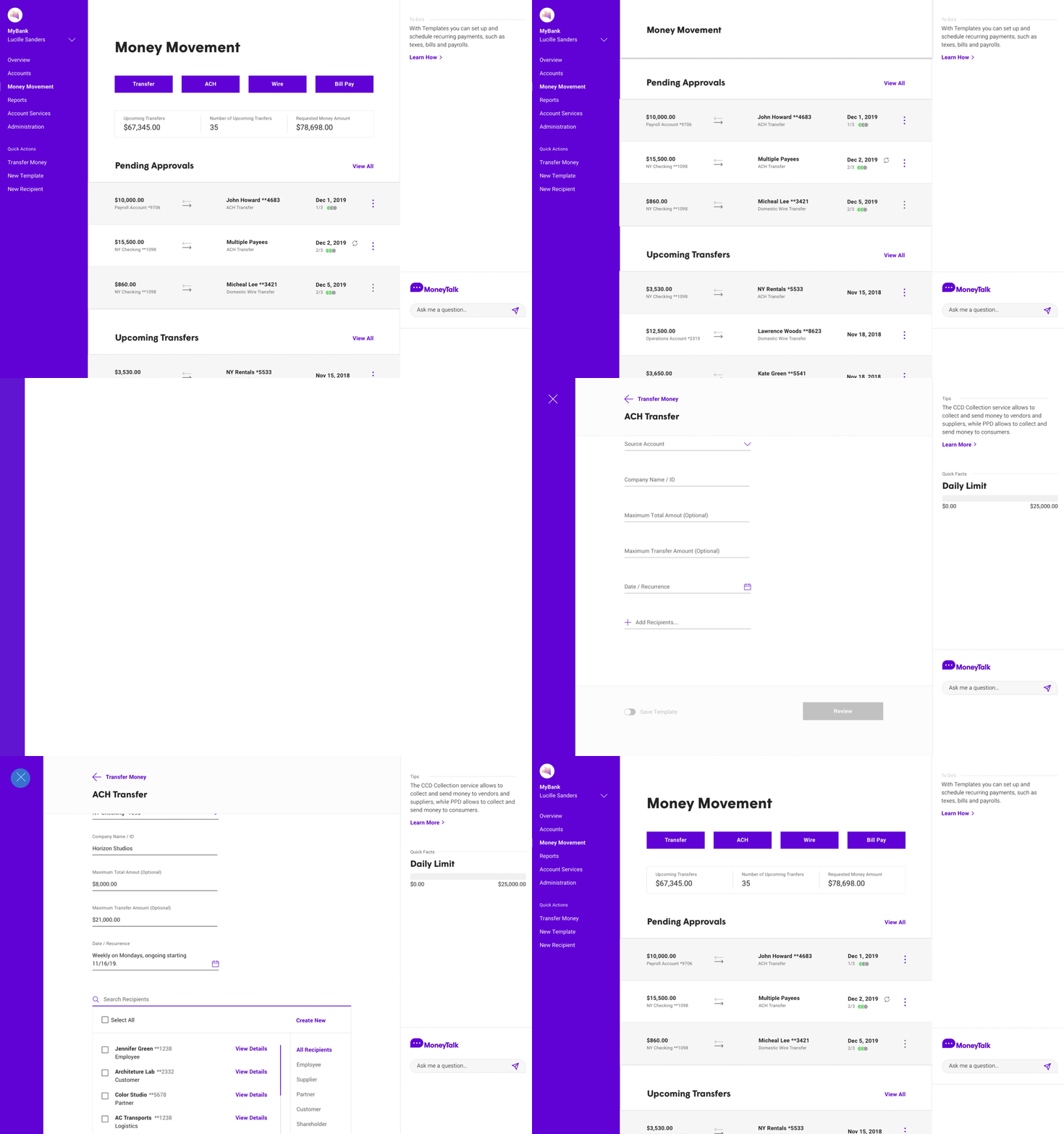
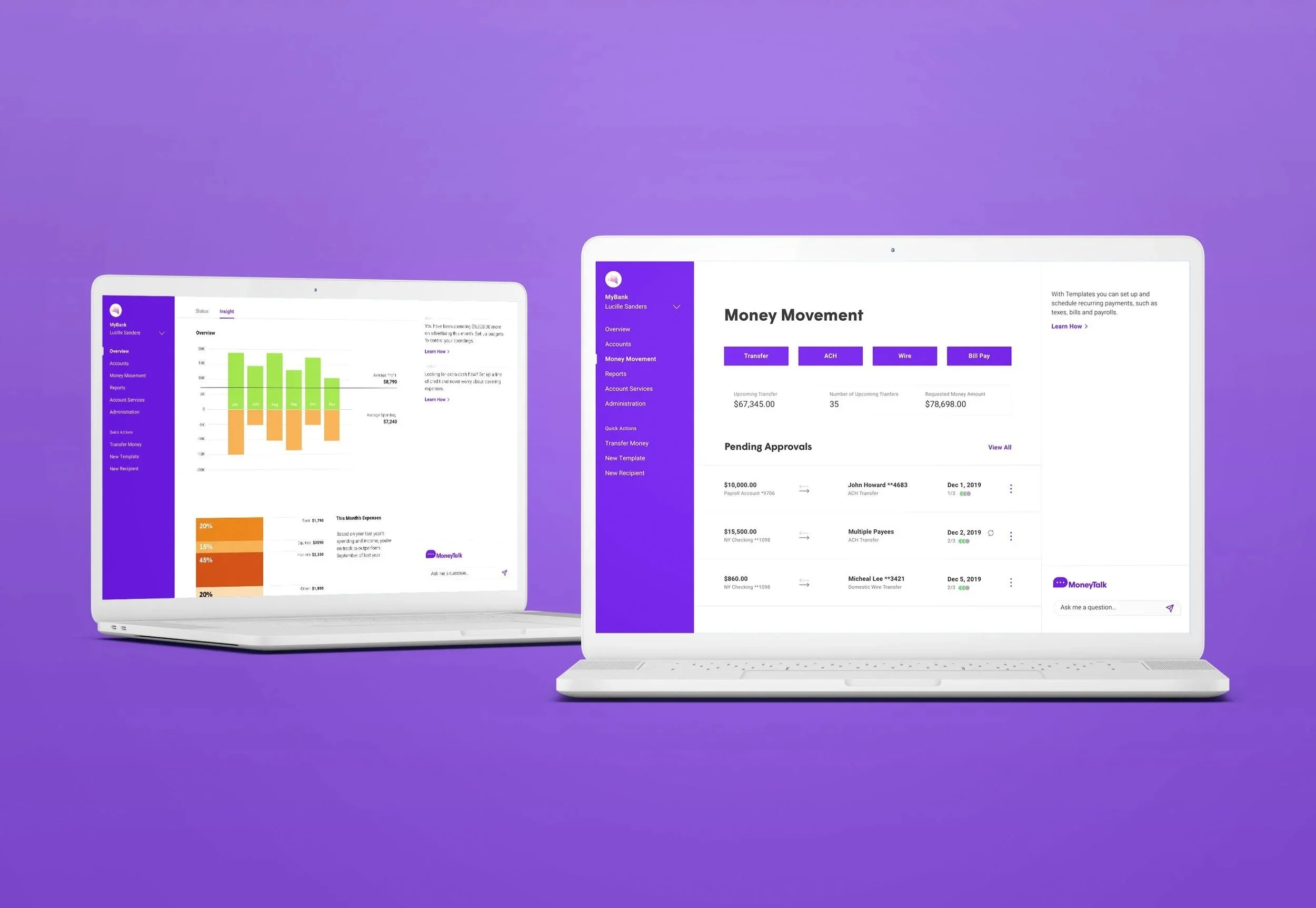
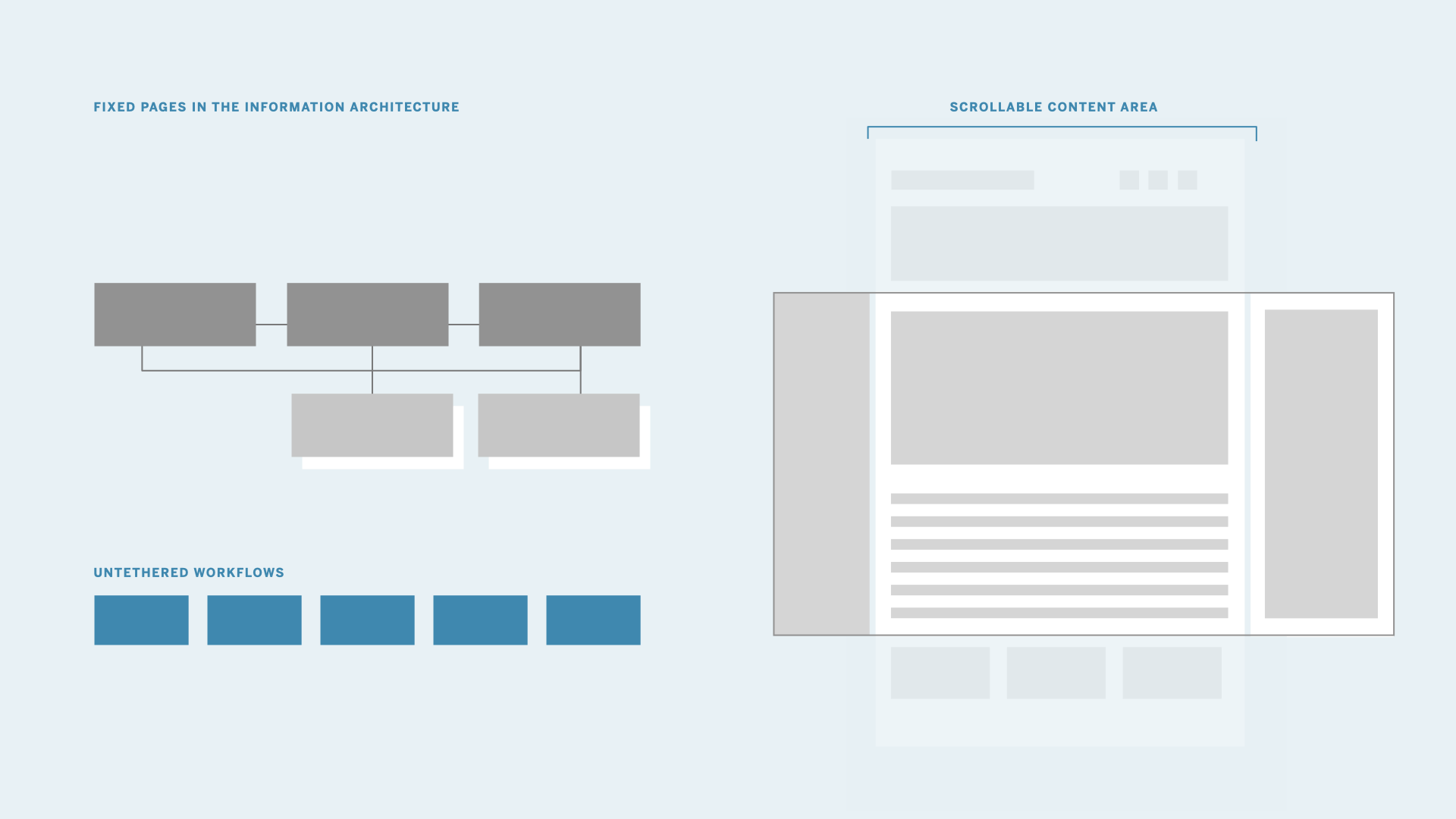
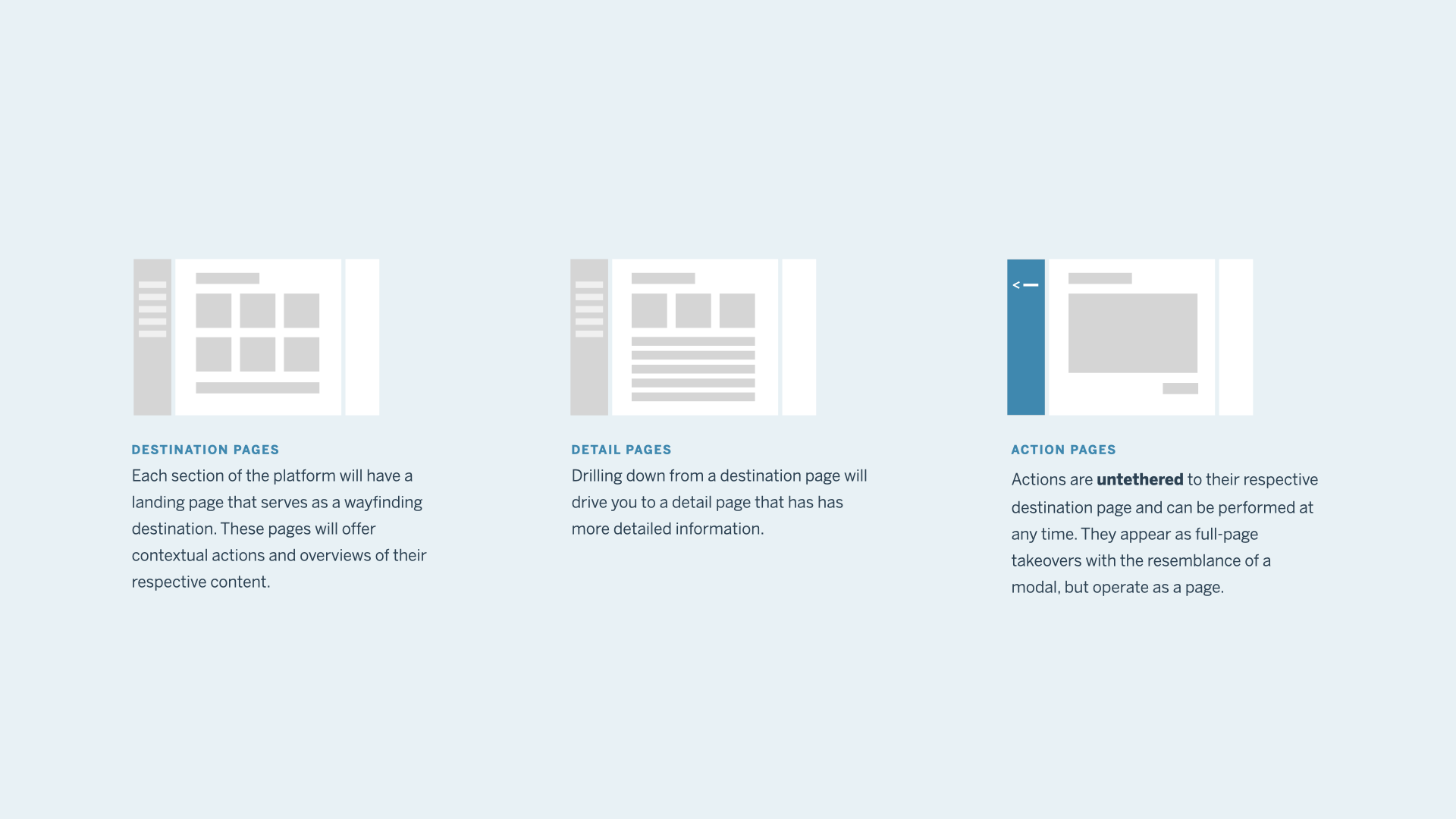
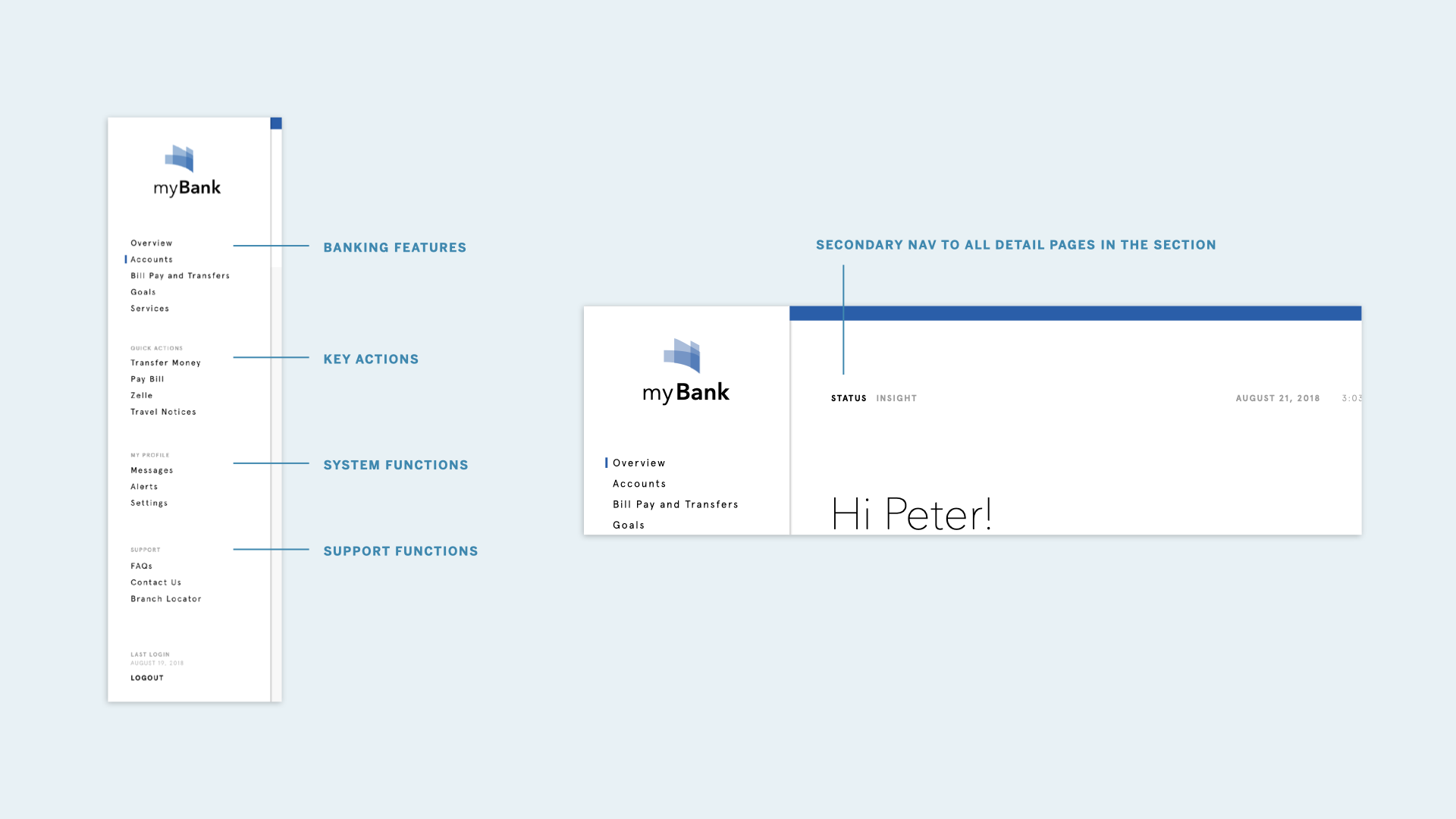
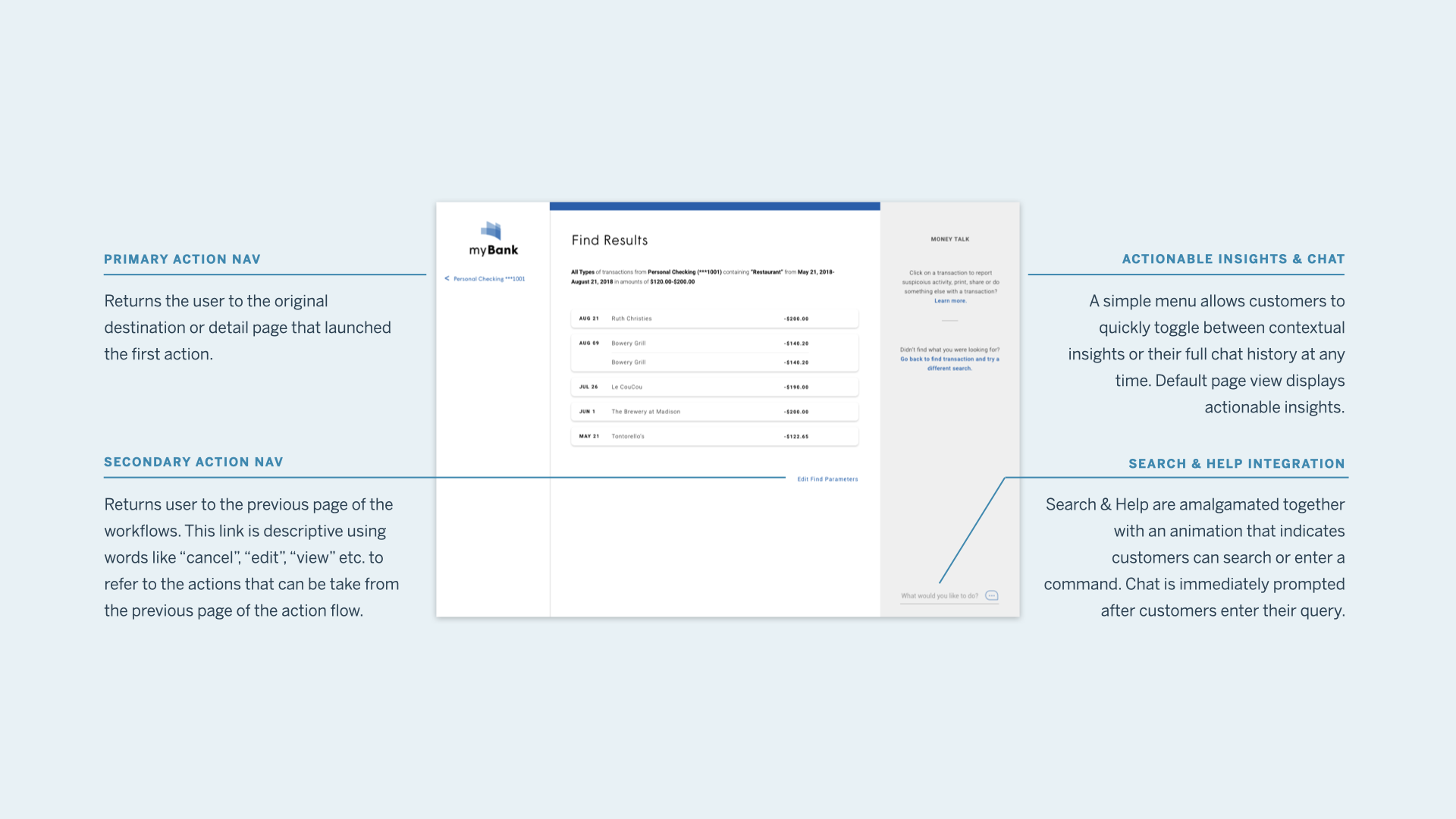
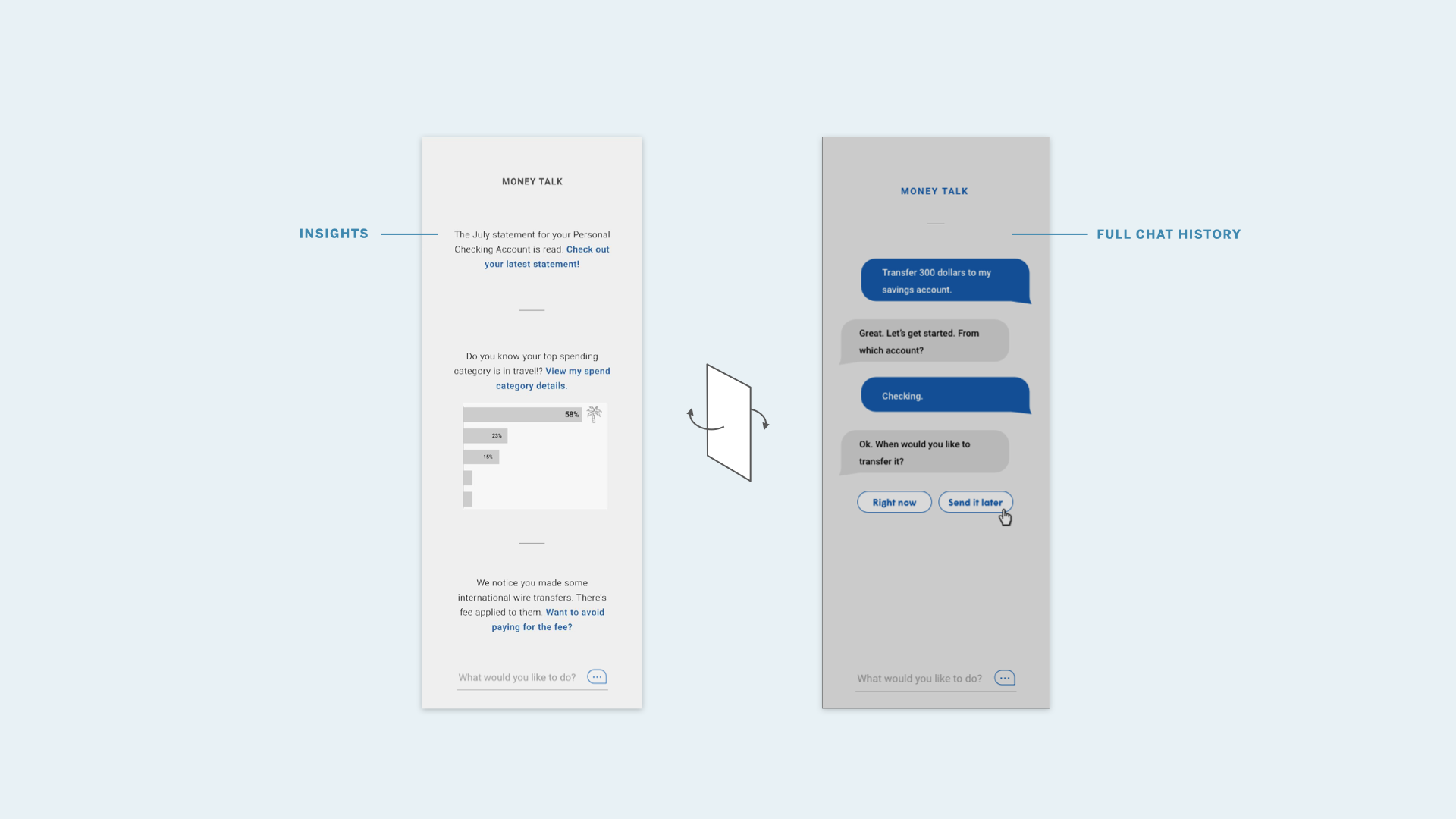
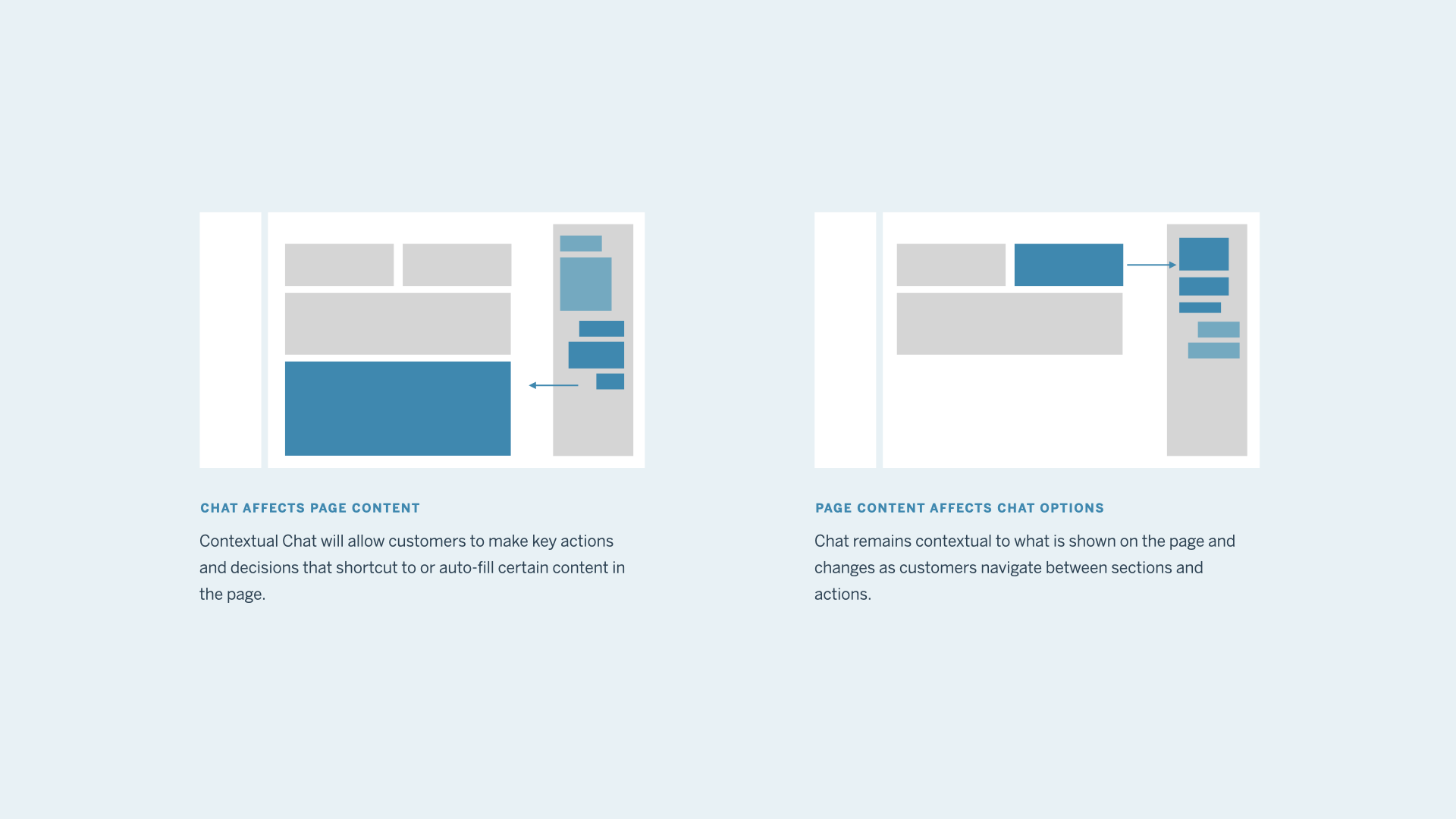
To reduce complexity, the platform is structured around a simplified two-layer architecture consisting of destination pages for main sections and detail pages for deeper interactions. Workflows are designed as modular elements that can be triggered from multiple entry points, rather than being tied to a fixed structure. Each page includes navigation, core content, and MoneyTalk - a contextual chatbot that adapts dynamically to the user’s actions, offering guidance, surfacing insights, and supporting task completion in real time.
Experience
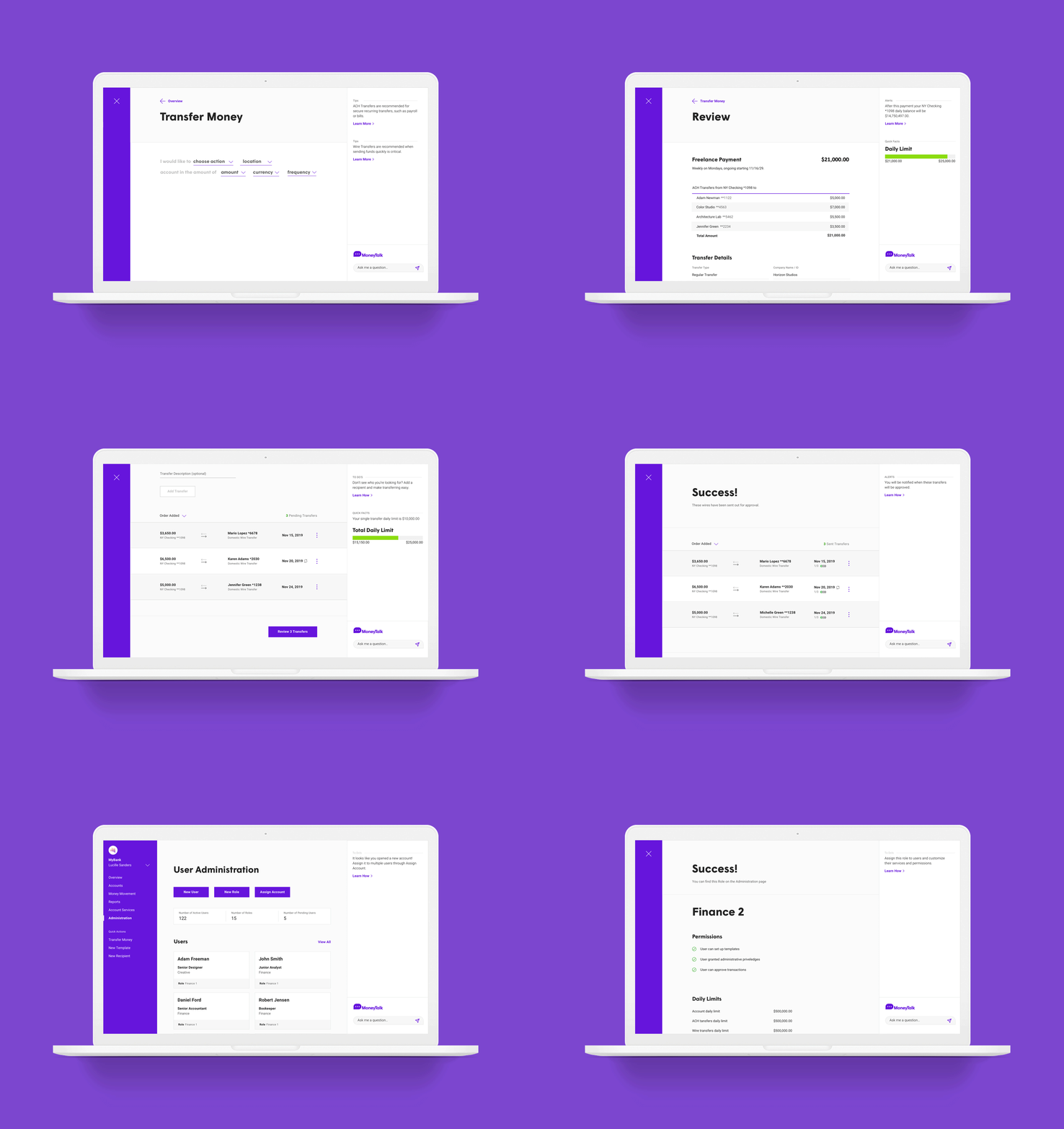
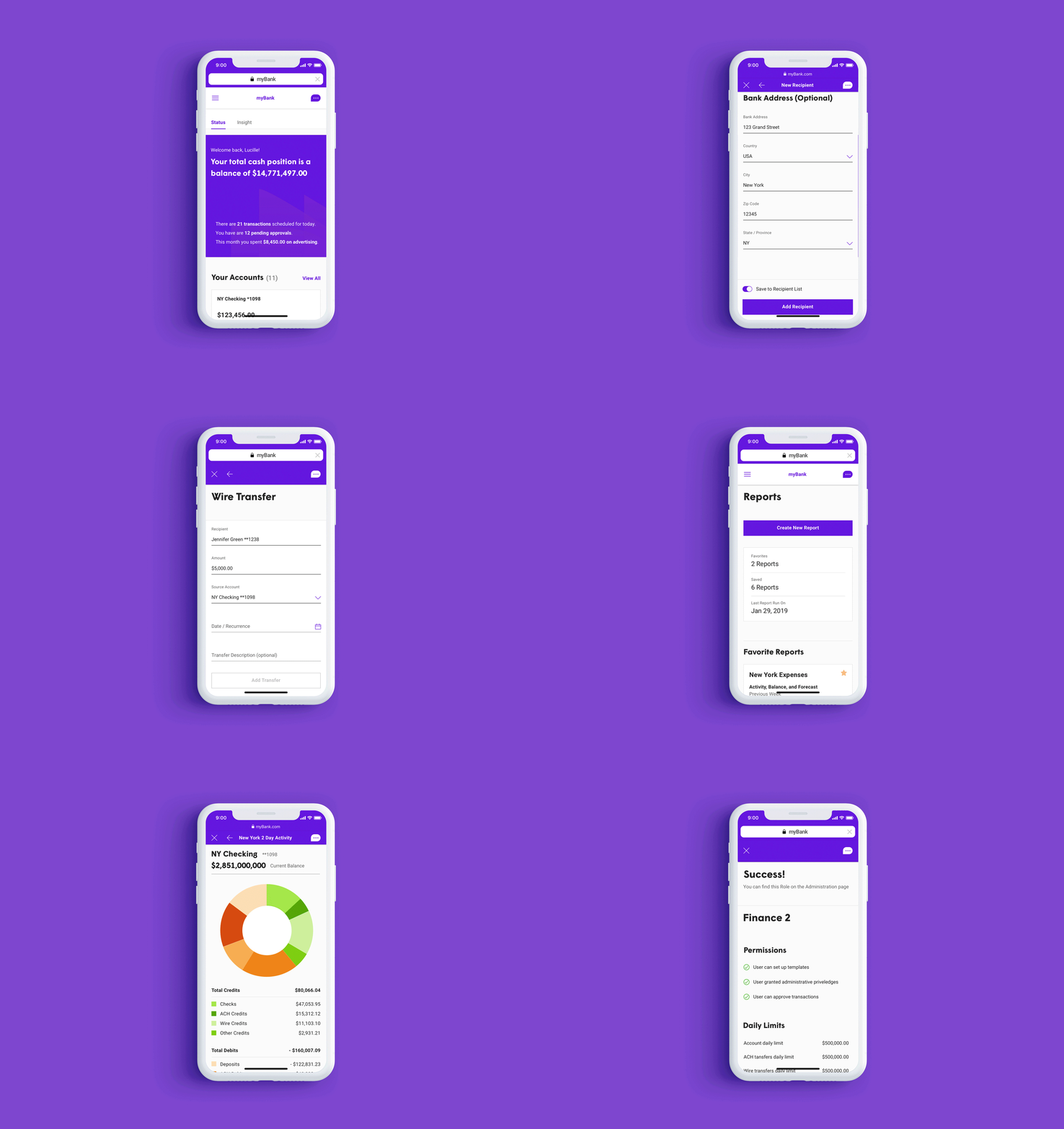
The framework was applied to four primary flows: processing payments through a guided wizard, managing and approving multiple wire transfers, reviewing account activity across large datasets, and configuring user roles and company settings. A responsive component library ensures a consistent experience across devices, with full functionality available on mobile. MoneyTalk remains accessible while scrolling, and the platform supports flexible branding, allowing customization of colors and logos to align with each client’s identity.