Virtual Account Management
Simplifying account structure and management through virtual accounts
Client
Capital One
Industry
Finance
Role
Design Lead
Focus
Product Strategy
The Challenge
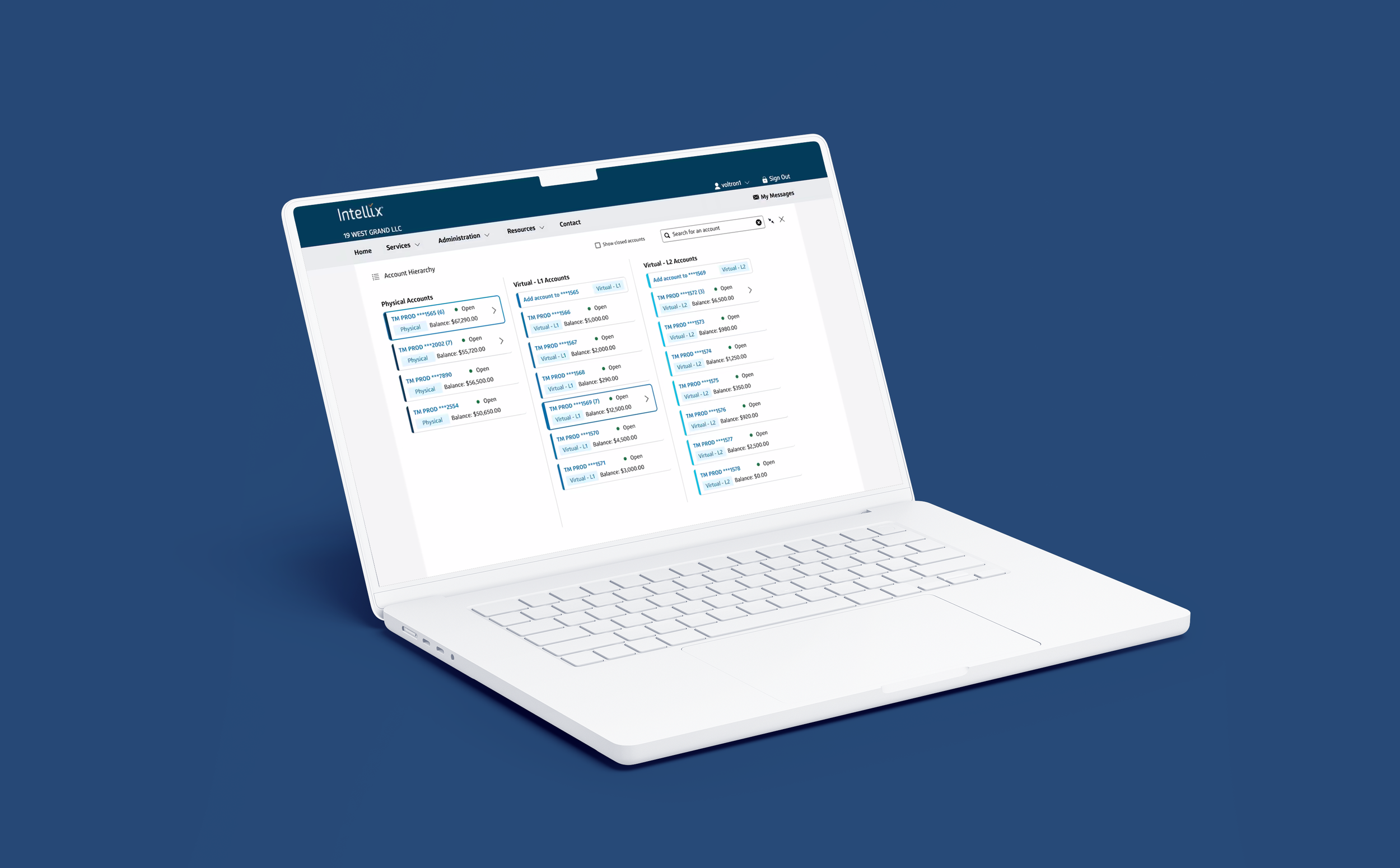
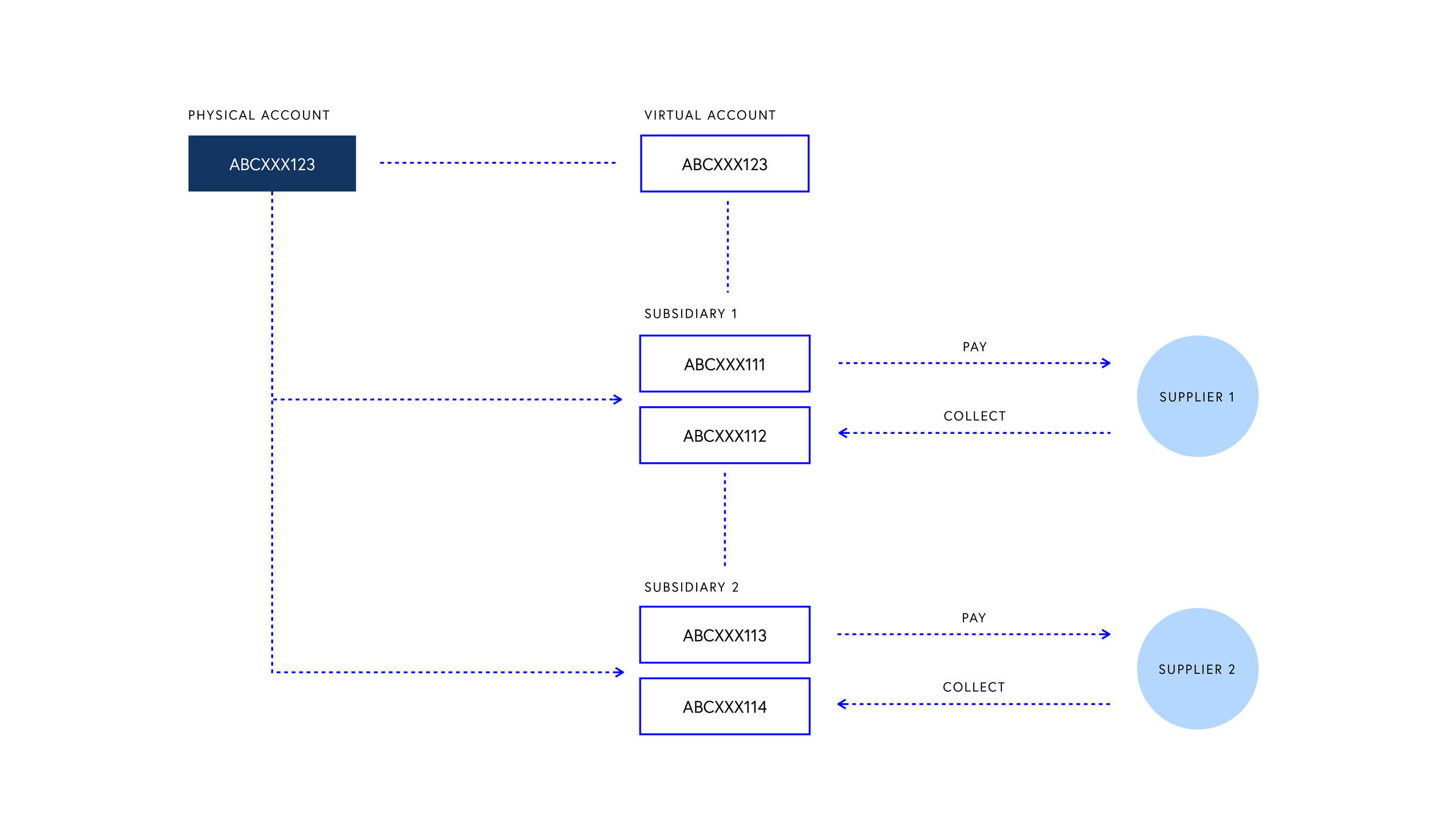
A Virtual Account Management (VAM) solution enables commercial clients to self-serve account structuring, improve cash flow visibility, and streamline reconciliation, while reducing operational lift for associates. As part of Capital One’s effort to close mid-market product gaps, VAM supports client acquisition and growth. It allows clients to create flexible account hierarchies to manage payables and receivables while maintaining a single physical account.
Data Analysis
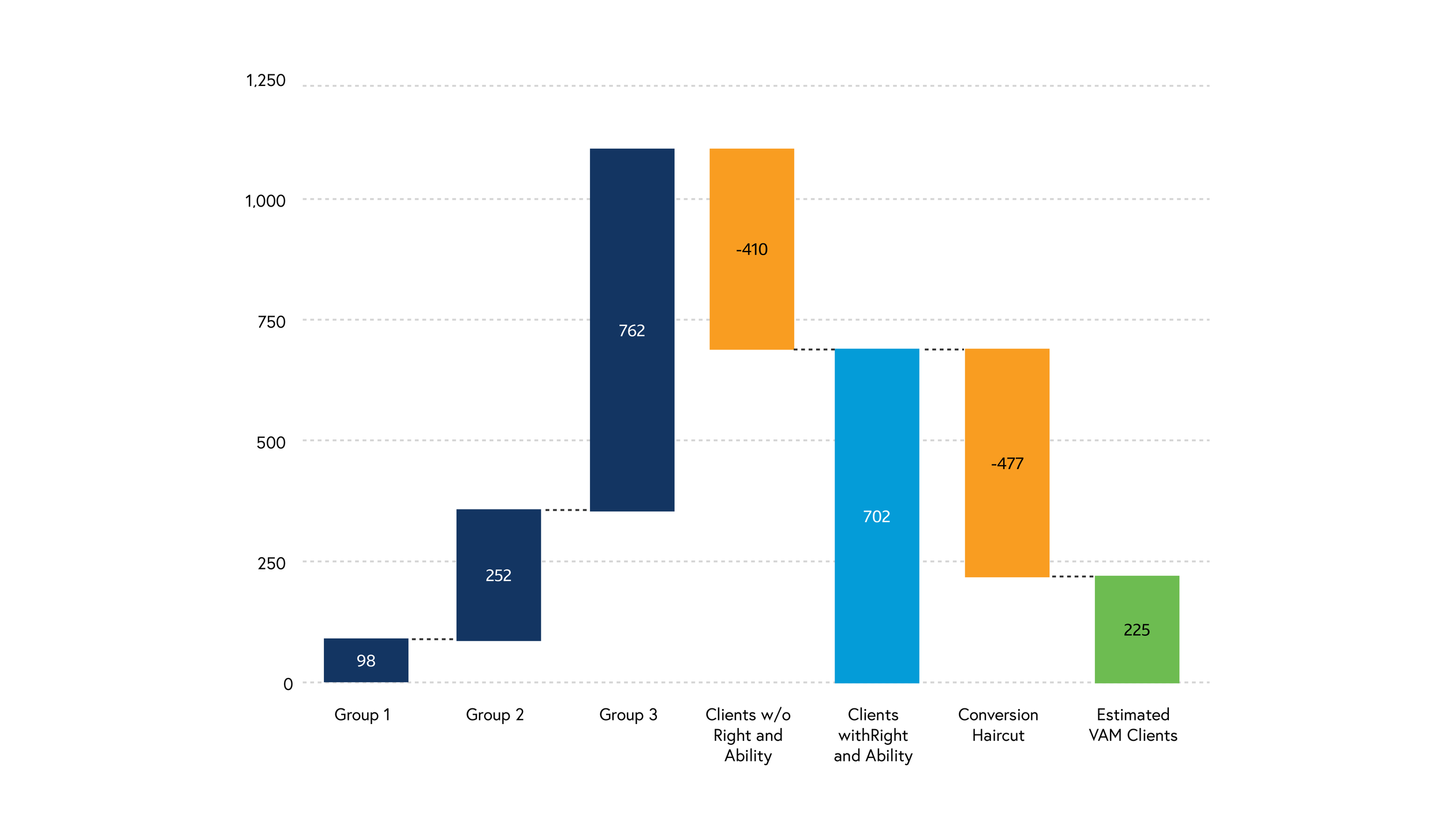
Initial analysis showed VAM as a cost-efficient alternative to in-house banking structures and complex treasury tools, with an estimated $9.1M revenue opportunity from acquisition, retention, and reduced servicing costs. Client data identified approximately 700 potential adopters within the initial strike zone, based on account activity and transaction patterns, validating both demand and scalability of the solution.
Research
To refine the go-to-market strategy and MVP scope, I interviewed Treasury Management Consultants supporting target clients and conducted empathy interviews with ten proxy clients already using VAM solutions. This research revealed key features, implementation patterns, and operational needs. Insights were synthesized into four archetypes, defined by configuration complexity and primary adoption goals.
Insight #1
Among the most common VAM indicators, TMCs and RMs mentioned complex business structures, a high number of operating accounts/transactions, and the use of similar products.
Insight #2
The most popular functional requirements include the ability to self-service account opening/closing and match capabilities from T-Key, ZBA and Escrow accounts. All in one centralized experience.
Insight #3
TMCs expressed concerns around the need for KYC compliance, multi-entity structures, data retention for closed accounts, product billing, account credit and product education.
The Curator
Business Transformation
Advanced Configurations
Curators work in large organizations and use VAs to increase efficiency. They open accounts frequently but need to configure them differently to match unique business needs and regulations. They wish for customization and automation to reduce workload and bank interactions.

The Strategist
Business Transformation
Standard Configurations
Strategists work in medium-large organizations and use VAs to simplify bank architecture and transform the business. They don’t open accounts frequently and can work with standard configurations, but want high level control to contain account number and keep everything centralized.

The Caller
Business Transformation
Advanced Configurations
Callers work in medium-large organizations and use VAs to track performances for specific lines of business. They don’t open account often but tend to rely on the bank to configure them based on their needs. They might struggle to see larger applicability of VAs without the bank support.

The Go-Getter
Isolated Improvements
Standard Configurations
Go-Getters work in medium-small organizations and use VAs to reduce account opening lead times and costs. They are less sophisticated, use VAs mostly for temporary needs and might need some bank support, but are on a journey to discover their true potential.

MVP Definition
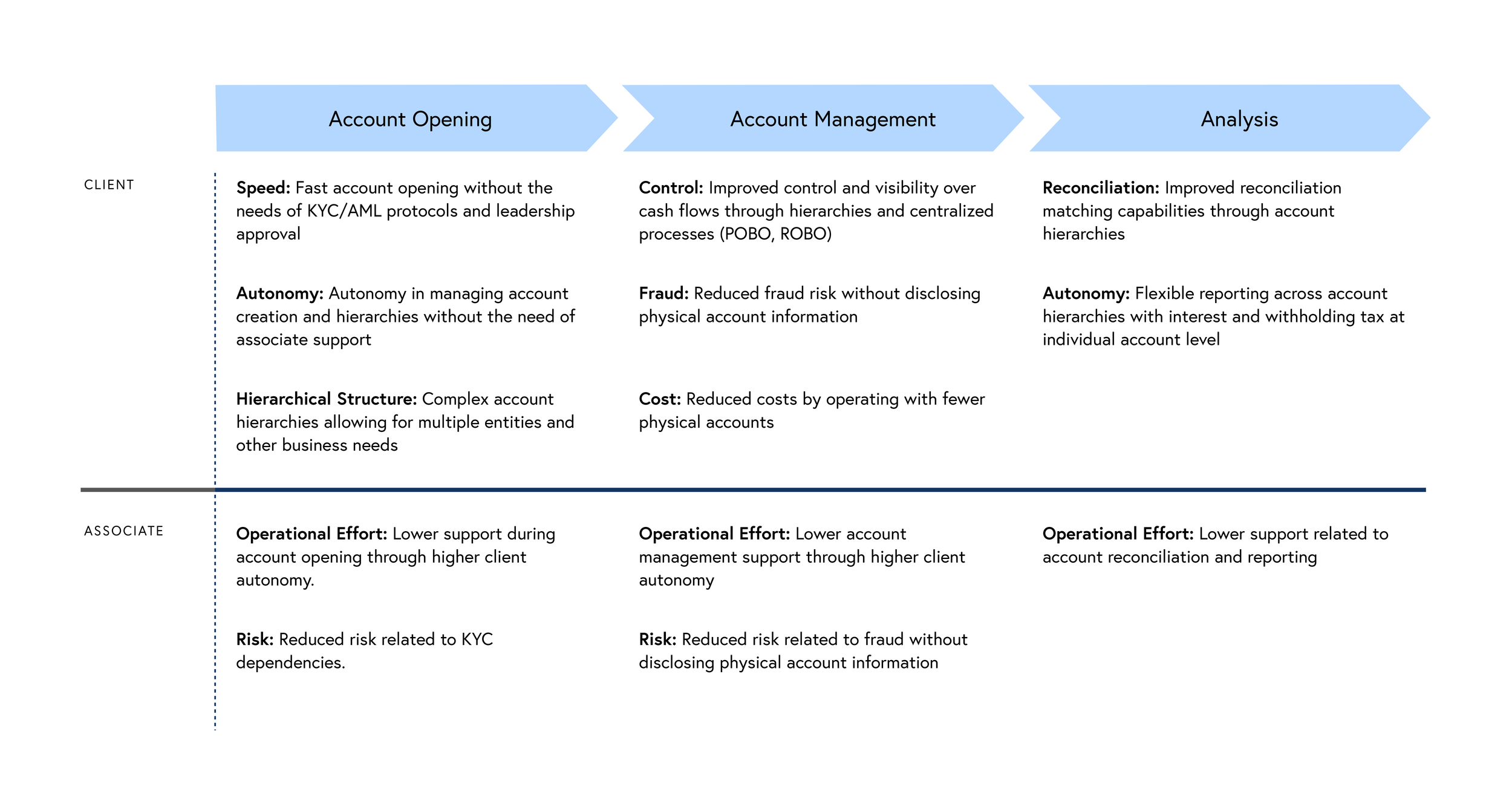
Working closely with product partners, I helped prioritize MVP features using a framework balancing client value, operational impact, and risk. The initial scope focused on enabling flexible account hierarchies, transaction visibility, cash concentration, and access to standard reporting. These capabilities addressed core client needs while ensuring feasibility for a first release.
Vendor Evaluation
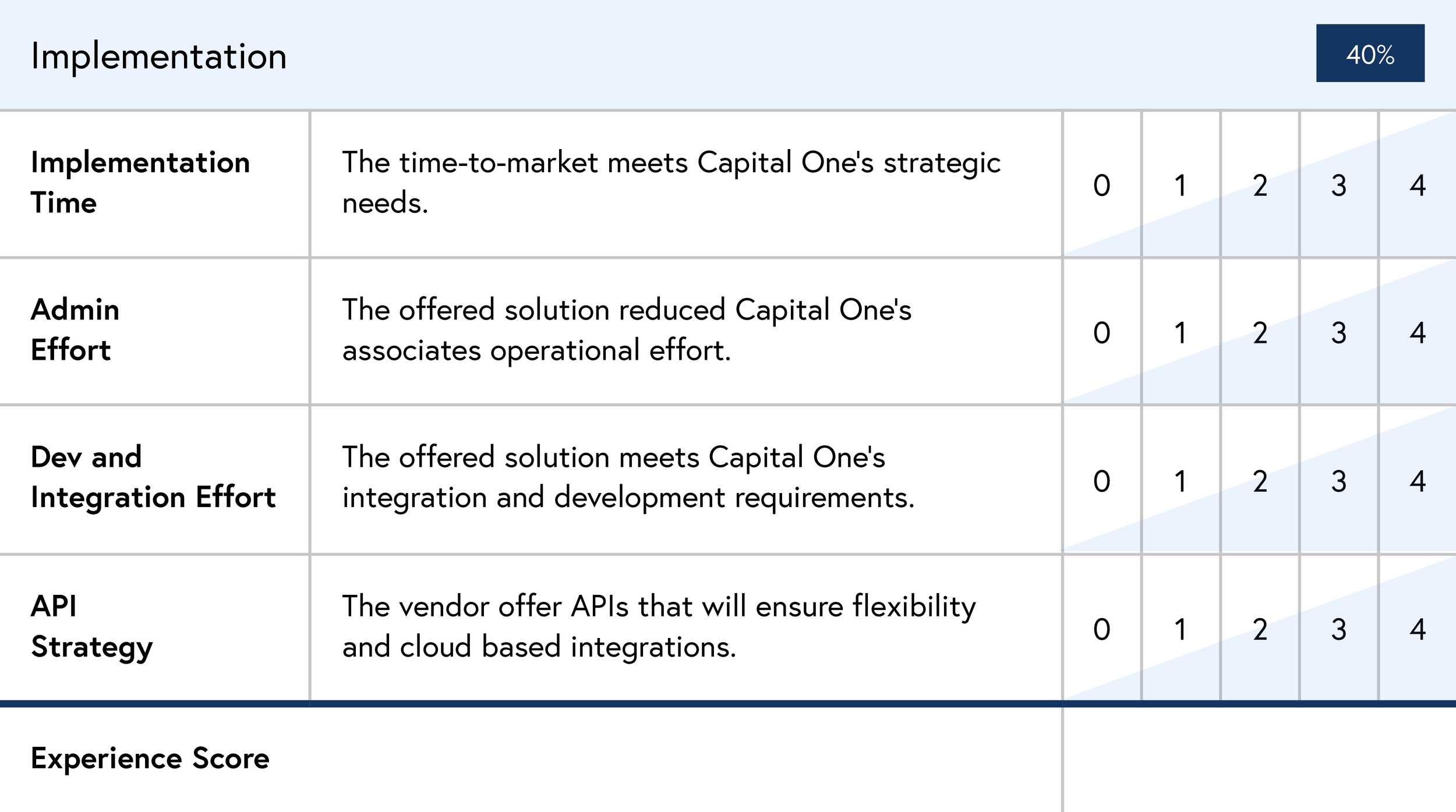
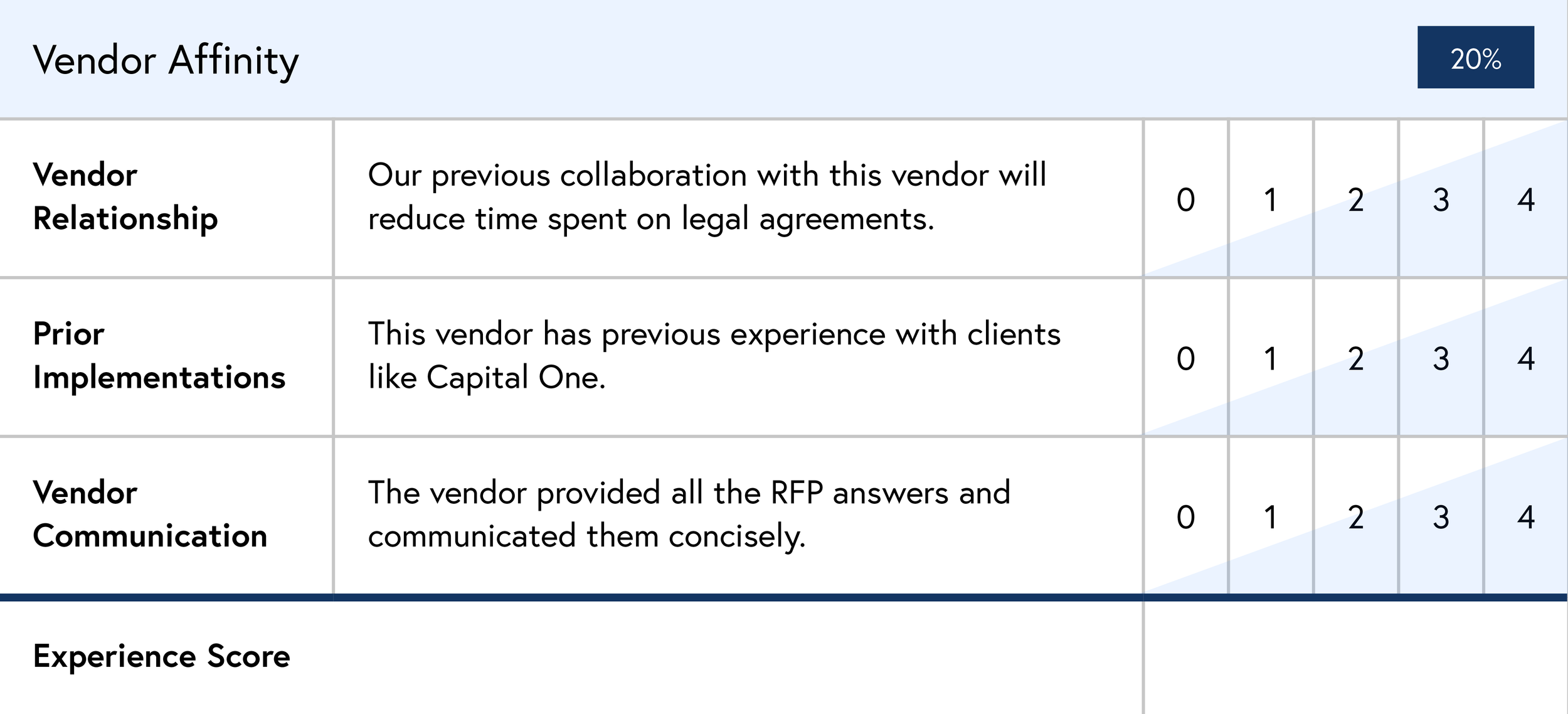
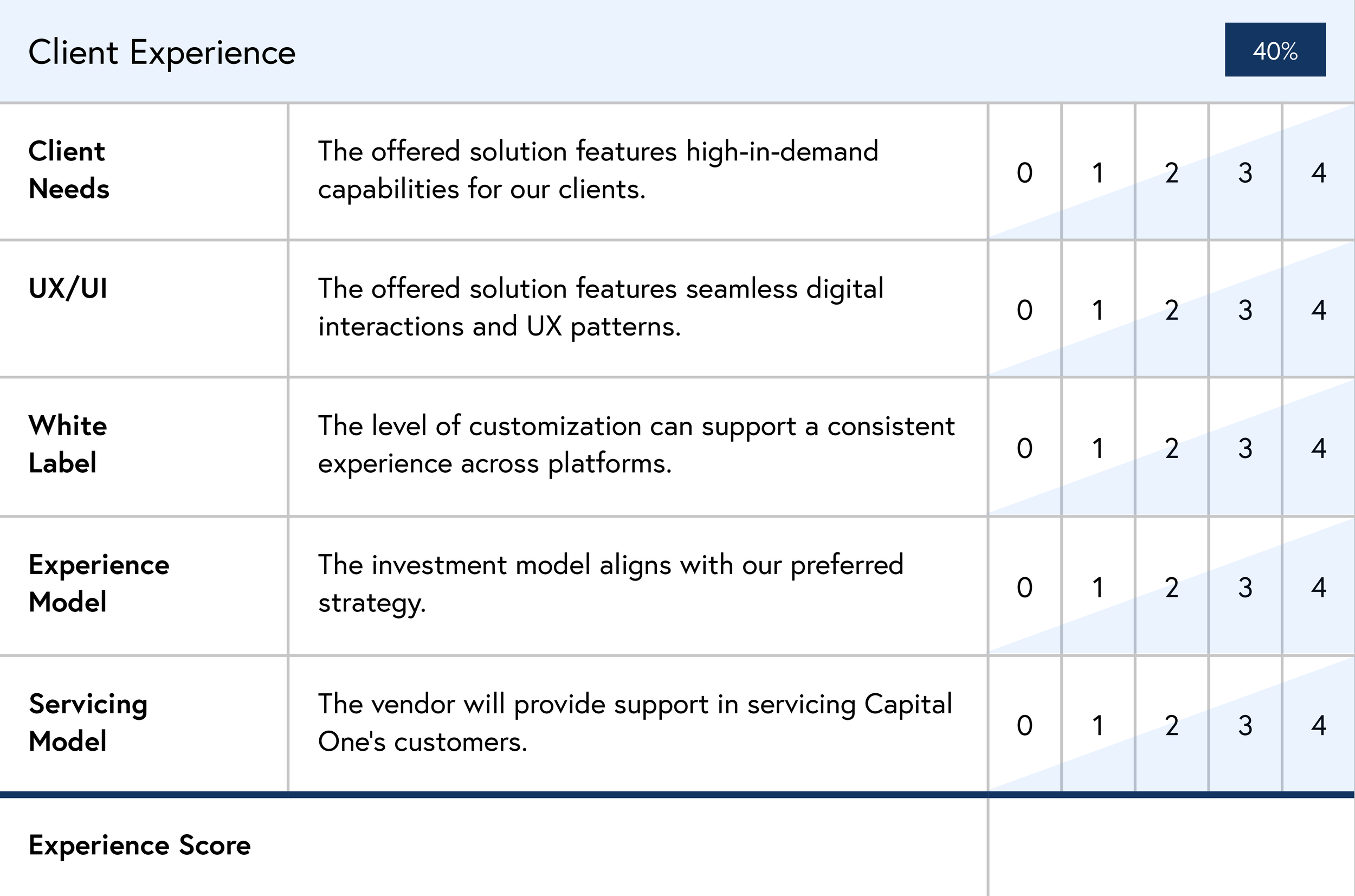
To accelerate time to market, Capital One partnered with an external vendor. I supported vendor selection by creating scorecards assessing user experience, technical integration, and strategic fit. The design team collaborated closely with engineering to understand API capabilities and constraints, ensuring the final experience aligned with MVP requirements while remaining scalable.
Experience
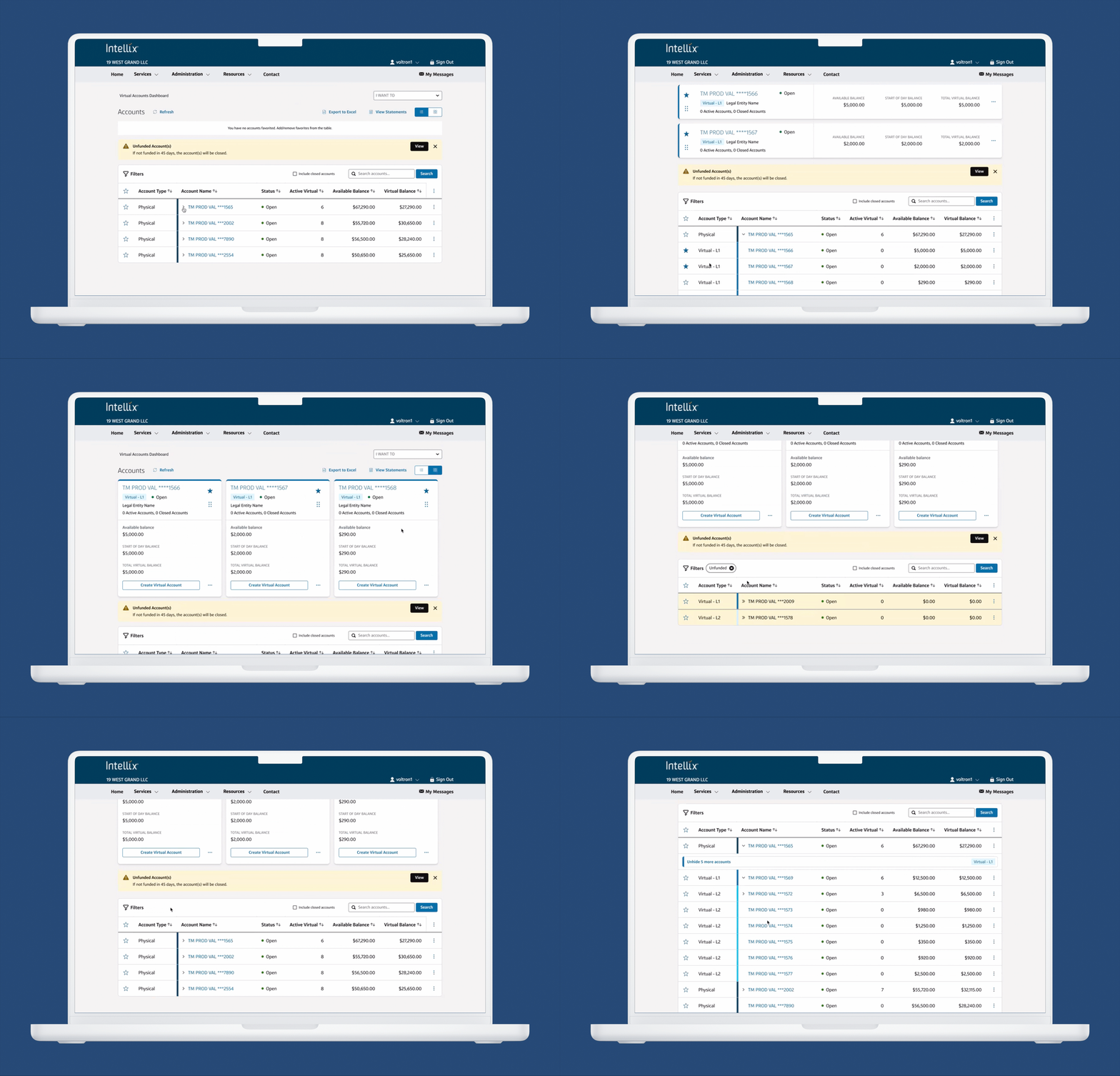
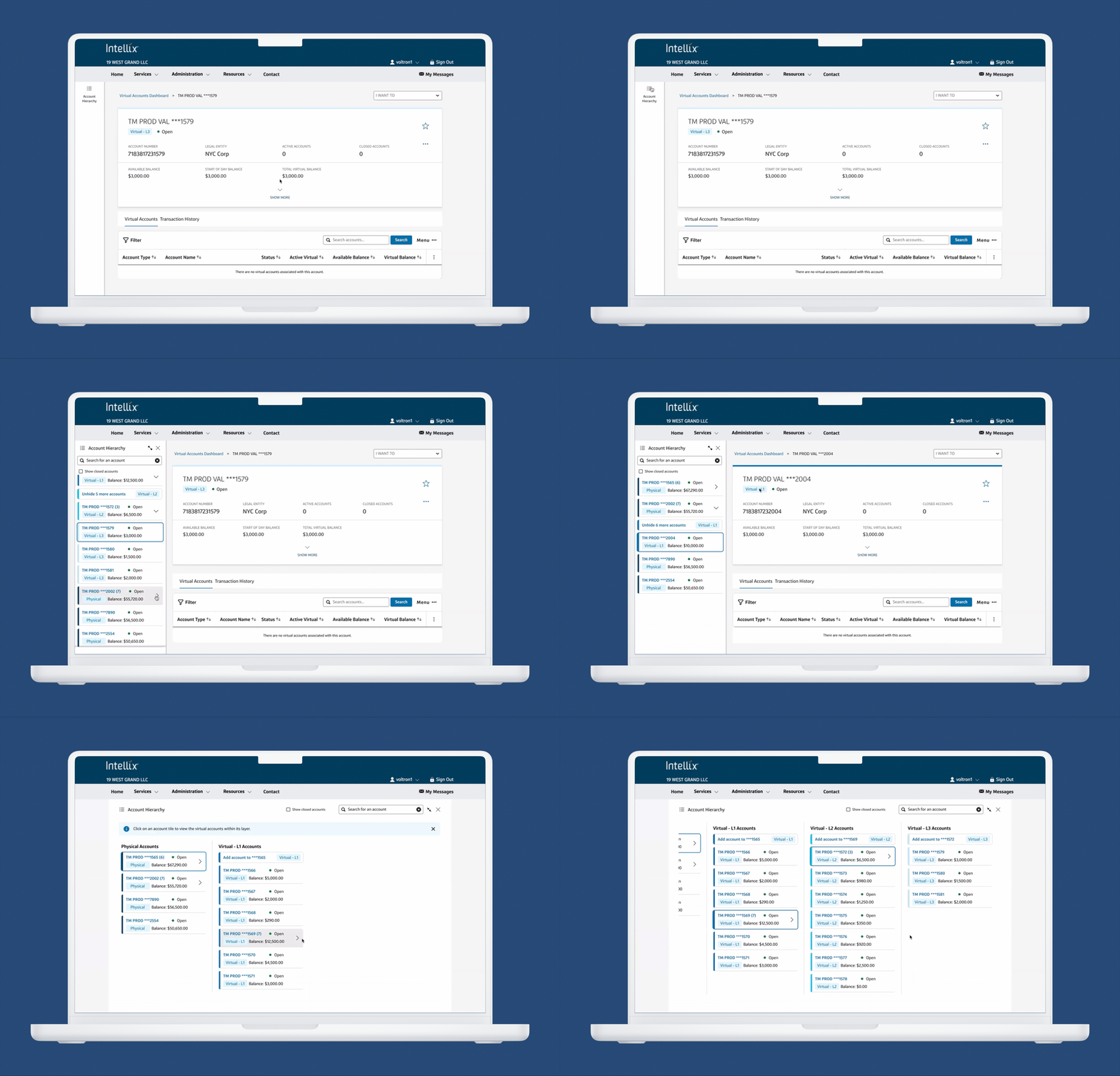
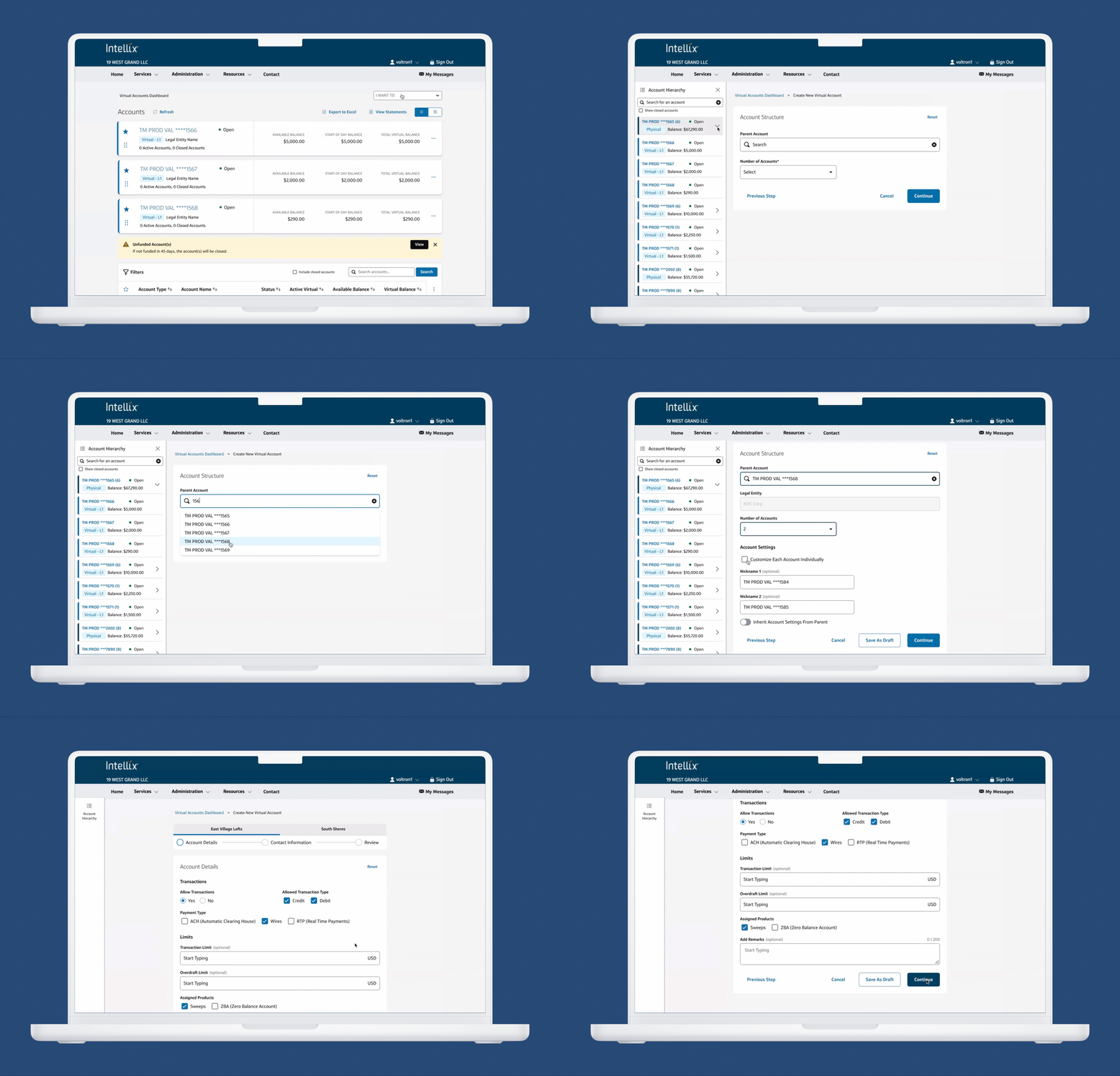
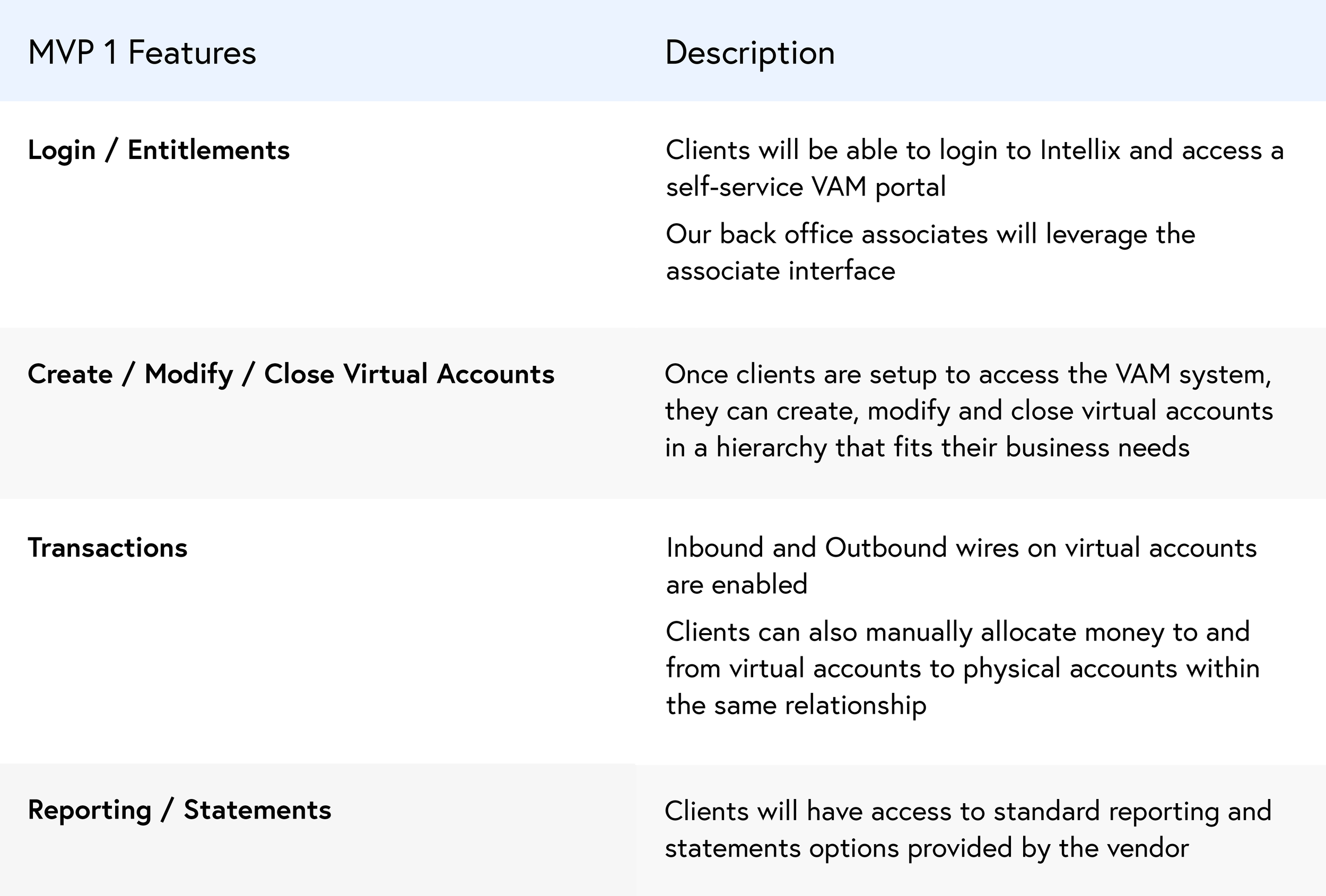
The first release integrates VAM into Capital One’s treasury platform, Intellix, with access provisioned through internal systems. Clients can create, modify, and close virtual accounts, with wire transfers enabled as the initial transaction type due to simpler integration. Reporting is available at both physical and virtual account levels, providing enhanced visibility and control over financial operations.